
What Actually Drives Countertop Cost (Edges, Cutouts, Waterfalls, Seams)
Short answer: the slab is only the starting point. Your installed cost is driven by four things working together — the material you choose, how much of it the job needs, how much fabrication the design calls for (edge profiles, cutouts, waterfalls, full-height backsplashes, vein-matched seams), and how hard the piece is to install. That's why two kitchens of the same square footage can be quoted very differently, and why a flat price-per-square-foot number is usually misleading. Think of the big drivers as choices you control: a plain eased edge and a drop-in sink keep things lean; a thick mitered edge, a waterfall island, and a wall of full-height slab are where the number climbs — often for good reason. Here's an honest, fabricator's-eye breakdown of where the money actually goes, so you can spend it where it counts.
By Leo Chuahy · Prime Surfaces — founder and certified installer (Neolith, Dekton, Porcelanosa & Daltile Panoramic)
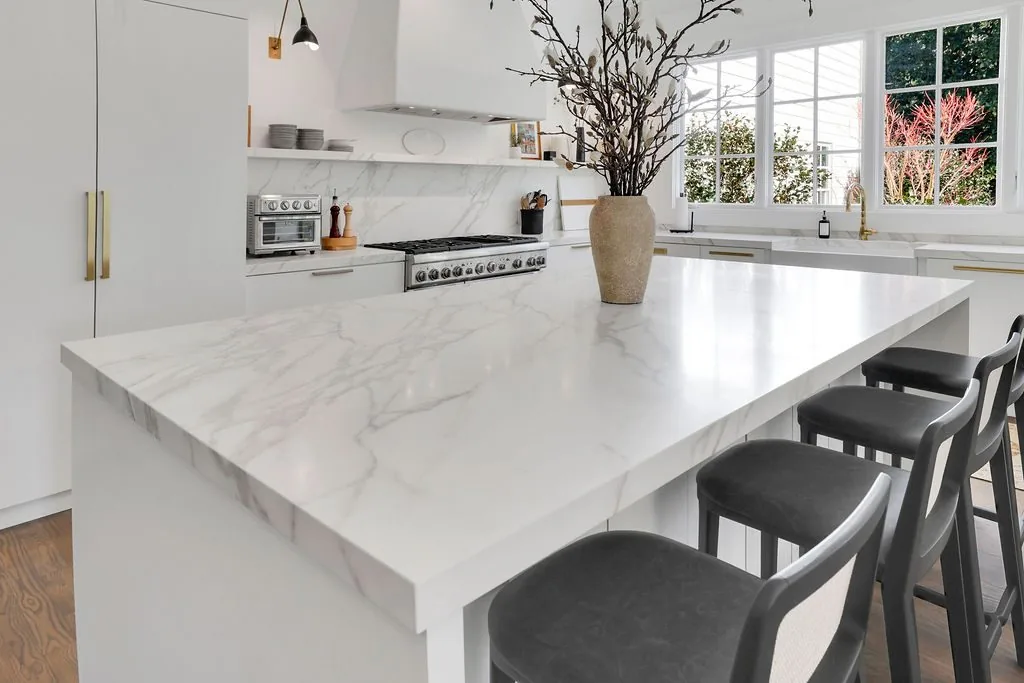
What actually drives the cost of a countertop?
Most people assume the price is mostly the stone. It isn't. A countertop is a fabricated, installed product, so the final number reflects four things at once: the material and its grade, the quantity the layout requires (including the slab you have to buy even if part of it isn't used), the fabrication — every edge, cutout, miter, and seam is labor — and the installation, which depends on size, weight, and access. Change any one and the quote moves. This is good news, because it means you have real control: the same beautiful stone can land at very different prices depending on the details you choose around it.
Material or fabrication — where does the money go?
It shifts with the design. On a simple layout — a few straight runs, a standard edge, a drop-in sink — the slab is usually the biggest single line, so the material grade is your main lever. On an ambitious layout — mitered edges, a waterfall, vein-matched seams, lots of cutouts — fabrication and install can rival or exceed the material, because those are hours of skilled hands-on work. That's why an entry-level quartz can still land high if the design is complex, and an exotic slab on a plain layout can be more reasonable than you'd think. We quote the two together, because the finished installed number is the only one you actually pay.
How much does the edge profile change the price?
More than most people expect, and it's one of the easiest places to tune a budget. A standard eased or pencil edge is part of a baseline quote. Step up to an ogee or other decorative profile and you're paying for extra machining and hand-finishing. A mitered edge — which folds the slab to look like a thick, solid slab front — is the most labor-intensive of all, because two pieces are cut at 45 degrees and joined seamlessly right on the corner, and on stone and porcelain it also uses more material. The edge is a lever you can move up for drama or down for savings without ever changing the material you fell in love with.
Do cutouts for sinks and cooktops add cost?
Yes — each one is precise, risky work on an expensive slab, so each adds labor. An undermount sink costs more than a drop-in, because its exposed edge has to be polished to match the top; a drop-in hides its own edge. Cooktops, faucet and soap-dispenser holes, drainboards, and outlet cutouts in a backsplash all add up. No single one is dramatic, but a kitchen with an undermount main sink, a prep sink, a cooktop, and a handful of holes carries real cumulative cost compared with one drop-in sink. We itemize cutouts in the quote so nothing is a mystery, and so you can decide which ones are worth it for how you actually use the kitchen.
Why do waterfalls and full-height backsplashes cost more?
Because both add material, labor, and risk at the same time. A waterfall island runs the slab down the sides to the floor: extra material, precise mitered corners, and often more stone purchased so the veining can be matched around the corner (we go deep on this in our waterfall islands guide). A full-height backsplash swaps a short strip for a wall of slab — more square footage, and sometimes a second slab to carry the pattern up the wall (see slab vs. tile). Both also demand careful handling and support on install day. They're genuinely more work, not just a bigger number — and when they're executed well, they're usually the features people remember about the room.
How do seams factor into the price?
Seams cut both ways, which is why "how many seams?" is the wrong question. More seams can mean more labor to cut, finish, and epoxy-bond each joint cleanly. But chasing zero seams can cost more, because avoiding a seam on a long run may force an oversized or second slab and adds handling difficulty. And vein-matching a seam so the pattern flows across it unbroken is skilled, slab-hungry work. The right goal is seams placed where they're least visible and most sound — a planning decision we make with you before a single cut, not the blunt pursuit of the fewest seams at any price.
Does your home's access and location matter?
It can, and it's the driver people forget. Large slabs are heavy and unwieldy, so getting them into the space affects the quote. A ground-floor kitchen with a clear, wide path is simple; a tight stairwell, a high-rise or apartment install, long carries, or a waterfall leg that has to be set precisely all add time and sometimes extra crew. Distance to the project and the condition of the site play in too. It's rarely the biggest line, but it's real, and it's part of why the identical countertop can be priced differently for two different homes. We assess it at templating rather than guessing — the same reason we quote install-only work for builders from the actual site.
The Prime Surfaces take
"Why is it so expensive?" almost always has an answer you can see once it's broken down — and often a lever you can pull. Coming from the slab side of the business, we'd rather show you where the money goes than hide behind a flat per-foot figure: pick the material you love, then we'll tell you honestly which edge, which cutouts, whether a waterfall or full-height backsplash earns its keep in your room, and where the seams should fall. If the budget is tight, the design details are usually where to flex, not the quality of the stone or the install. Tell us about your kitchen and we'll give you a clear, preliminary range — and a firm number once we've templated — with no surprises. Not sure which material even fits? Start with our porcelain vs. quartz vs. natural stone guide.
FAQ
What actually makes a countertop expensive?
Four things do most of the work: the material you pick, how much of it the job needs, how much fabrication the design calls for, and how hard the piece is to install. The slab is only the starting point. A plain rectangular counter in an entry-level stone is the cheapest thing we make; the same material becomes far more expensive once you add a thick mitered edge, several cutouts, a waterfall, a full-height backsplash, or seams that have to be vein-matched. Two kitchens of identical square footage can be quoted very differently because of those choices, which is exactly why a real quote beats a price-per-square-foot guess.
Does the material or the fabrication cost more?
It depends on the design, and that surprises people. On a simple layout, the slab is usually the biggest single line. On an ambitious one, fabrication and install can rival or exceed the material, because mitered edges, waterfalls, vein-matching, and lots of cutouts are hours of skilled labor, not stone. That's also why a budget slab can still land at a high installed price if the design is complex, and why an exotic slab on a plain layout can be more reasonable than you'd expect. We quote material and fabrication together, because the finished number is the only one that matters to you.
How much does the edge profile change the price?
More than most people expect. A standard eased or pencil edge is included in a baseline quote. The price climbs as the edge gets more involved: ogee and other decorative profiles take extra machining and hand-finishing, and a mitered edge that builds up a thick, solid-looking front is the most labor-intensive of all because two pieces are cut at 45 degrees and joined seamlessly on the corner. On natural stone and large-format porcelain, a mitered edge also uses more material. The edge is one of the easiest places to control budget, up or down, without changing the material.
Do sink and cooktop cutouts add to the cost?
Yes. Every cutout is precise, risk-laden work on an expensive slab, so each one adds labor. An undermount sink cutout needs its exposed edge polished to match the top, which is more work than a drop-in sink that hides its own edge. Cooktop and faucet holes, drainboards, and outlet cutouts in a backsplash all add up. None of these is dramatic on its own, but a kitchen with an undermount sink, a prep sink, a cooktop, and several faucet and soap-dispenser holes carries real cumulative cost versus a single drop-in sink. We itemize them so you can see exactly where the money goes.
Why do waterfall islands and full-height backsplashes cost so much more?
Both are high-impact features that add material, labor, and risk at the same time. A waterfall island runs the slab down the sides to the floor, so it uses extra material, requires precise mitered corners, and often needs more stone bought so the veining can be matched around the corner. A full-height backsplash replaces a short strip with a wall of slab, adding square footage and sometimes a second slab to carry the pattern. Both also demand careful handling and support on install day. They're worth it when they're executed well, but they are genuinely more work, not just a bigger number.
How do seams affect countertop cost?
Seams influence cost in two directions. More seams can mean more fabrication labor to cut, finish, and bond each joint cleanly. But chasing zero seams can cost more, not less, because avoiding a seam on a large run may force buying an oversized slab or a second slab so the layout works, and it adds handling difficulty. On top of that, vein-matching a seam so the pattern flows across it is skilled, slab-hungry work. The goal isn't the fewest possible seams at any price; it's seams placed where they're least visible and most structurally sound, which is a planning decision we make with you before cutting.
Does install access and location change the price?
It can, and it's the factor people forget. Large slabs are heavy and awkward, so getting them into the space matters: a ground-floor kitchen with a wide, clear path is straightforward, while a tight stairwell, a high-rise or apartment install, long carries, or a waterfall leg that has to be set just so all add time and sometimes extra crew. Distance to the project and site conditions play in too. It's never the biggest driver, but it's a real one, and it's part of why the same countertop can be quoted differently for two different homes. We account for it at templating rather than guessing.
Why won't you just give me a price per square foot?
Because a per-square-foot number hides everything that actually moves your cost, and it tends to be either misleadingly low or needlessly high by the time the real design is accounted for. Two counters of the same size can differ a lot once you factor the material, the edge, the cutouts, any waterfall or full-height backsplash, the seam plan, and the install. We're glad to give you a preliminary range once we understand the project, and a firm number after templating confirms the exact measurements and layout. An honest quote reflects your kitchen, not a rule of thumb, and it means no surprises later.
Want a clear, honest number for your kitchen?
Tell us the material you're drawn to and the details you want — we'll break down where the money goes and give you a preliminary range, then a firm quote after templating.