
Porcelain vs. Quartz vs. Natural Stone: How to Choose
Short answer: for maximum durability and outdoor use, choose large-format porcelain; for a low-maintenance, uniform indoor look, choose quartz; for natural beauty and one-of-a-kind veining, choose natural stone (quartzite for hard-wearing kitchens, marble for classic looks you're willing to maintain). Below, a shop that installs all three walks through the trade-offs.
By the Prime Surfaces team · Certified installer of Neolith, Dekton, Porcelanosa & Daltile Panoramic
Every countertop and surface decision comes down to three families of material: large-format porcelain (sintered stone), engineered quartz, and natural stone. We fabricate and install all three, so here's the comparison without the bias of a shop that only sells one.
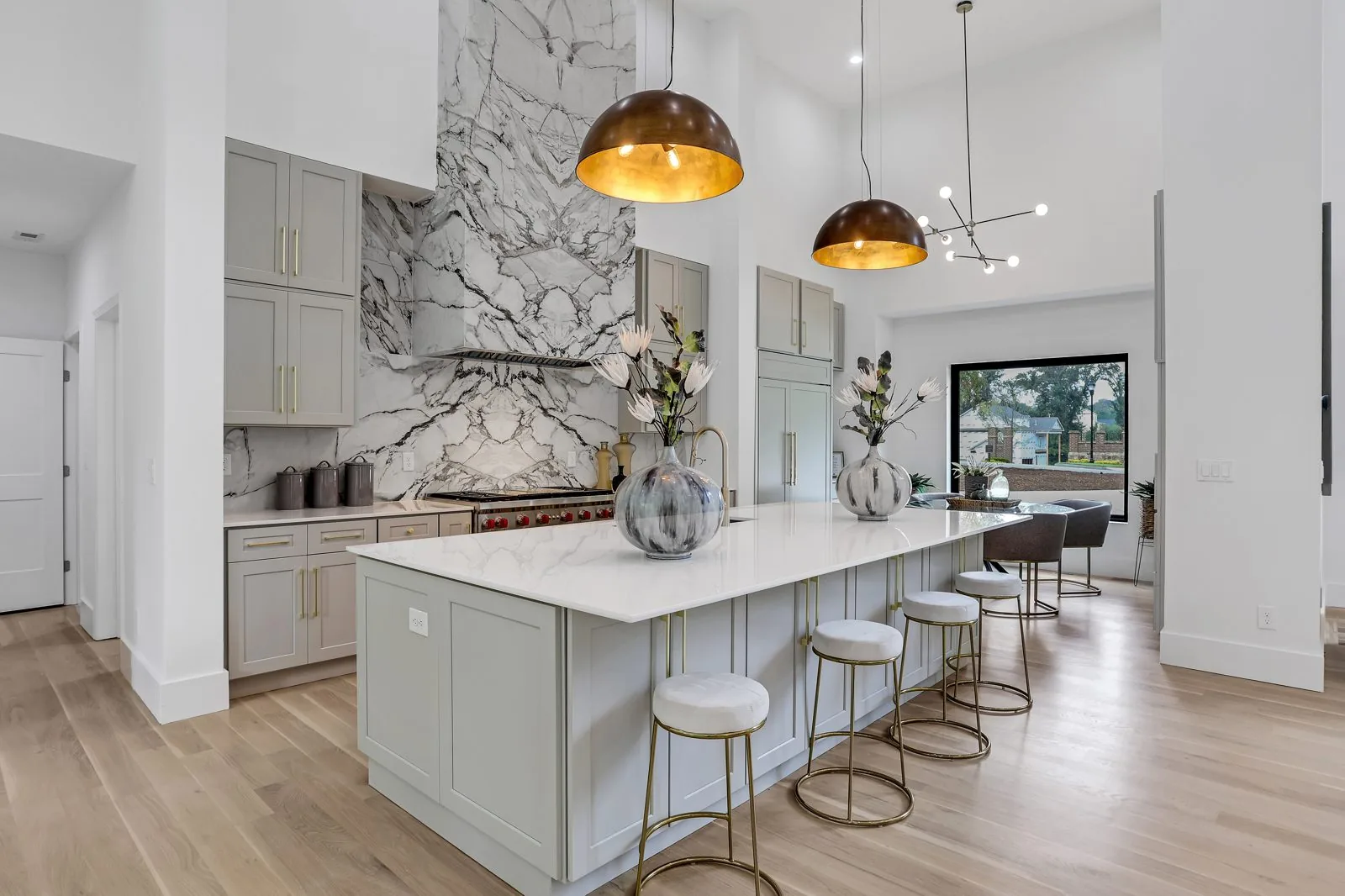
At a glance
Large-format porcelain — the most versatile and durable. Heat-, scratch-, stain-, and UV-resistant, non-porous, and available in slabs big enough for seamless walls and building façades. It's the only option rated for exterior use. Requires a certified installer because the thin, large sheets are demanding to handle.
Engineered quartz — roughly 90% ground quartz bound with resin. Non-porous, never needs sealing, and offers a consistent, uniform look. Excellent indoors, but it can scorch under hot pans and can fade in direct sunlight, so it's not for outdoors.
Natural stone — marble, quartzite, granite, onyx, travertine, soapstone. Unmatched natural beauty and uniqueness. Durability varies widely: quartzite and granite are very hard; marble is softer and more prone to etching and staining. Most benefit from periodic sealing.
How to decide
Start with the room. An outdoor kitchen or a façade is porcelain, full stop. A busy family kitchen leans porcelain or quartzite for resilience, or quartz for easy maintenance. A statement powder room or bar is where natural marble and onyx earn their keep.
Then the look. Want dramatic, one-of-a-kind veining? Natural stone. Want a specific pattern repeated seamlessly across a huge wall? Large-format porcelain. Want clean, uniform, and predictable? Quartz.
Then maintenance and budget. If you never want to think about sealing or staining, porcelain and quartz win. If you love a material enough to care for it, natural stone rewards you. Installed cost depends as much on scope, edges, and cutouts as on the slab itself — which is why a real quote beats a price-per-square-foot rule of thumb.
The Prime Surfaces take
Because we work in all three, our recommendation follows your project, not our inventory. Many of our favorite results actually combine materials — a porcelain island paired with a marble bar, or quartzite counters with a full-height porcelain backsplash. Tell us how you live in the space and we'll steer you to the right surface.
FAQ
Which is the most durable — porcelain, quartz, or natural stone?
Large-format porcelain is generally the most durable overall: it resists heat, scratches, stains, and UV, and it's the only one of the three rated for outdoor use. Quartz is very durable indoors and non-porous but can scorch and can fade in sunlight. Natural stone varies — quartzite and granite are very hard, while marble is softer and more prone to etching and staining.
Which is best for a kitchen?
For a hard-working kitchen, porcelain and quartzite are excellent for heat and scratch resistance; quartz is a great low-maintenance all-rounder; marble is beloved for its look but needs the most care. The best choice depends on how you cook, the look you want, and your budget.
Which is the most affordable?
Engineered quartz and many granites tend to be the most budget-friendly, while exotic natural stones (rare marble, quartzite, onyx) and premium porcelain lines sit at the top. Installed cost also depends heavily on scope, edges, and cutouts.
Do any of these need sealing?
Porcelain and quartz are non-porous and don't require sealing. Most natural stones benefit from periodic sealing to resist staining — how often depends on the specific stone.
Can I use these outdoors?
Large-format porcelain is the clear winner outdoors — it's UV- and freeze-thaw-stable, which is why it's used for façades and outdoor kitchens. Most natural stones can be used outdoors with care; engineered quartz generally cannot, as it can fade and degrade in direct sun.
Ready to choose with an expert?
Send us your project and we'll help you pick the right surface.