
Book-Matched Slabs: How Dramatic Stone Walls & Islands Are Made
Short answer: book-matching is a slab-layout technique where two consecutive slabs cut from the same block of stone are opened like the pages of a book and mirrored side by side, so the veining reflects symmetrically across the seam — a dramatic, butterfly-like effect that turns a wall, island, or fireplace into a single composition. It works best on stones with bold, directional veining — dramatic marbles, quartzites, and exotic stone — and depends on having sequential slabs from one block, which is why a book-match is planned before the stone is bought. Large-format porcelain can give the same look with purpose-made panel sets, while uniform quartz rarely book-matches well. It costs more because it takes extra material, careful dry-layout, and skilled fabrication — but it produces the most memorable feature in a room. Here's how it's done.
By Leo Chuahy · Prime Surfaces — founder, with a stone-slab sourcing background (Brazil, Spain & Italy)
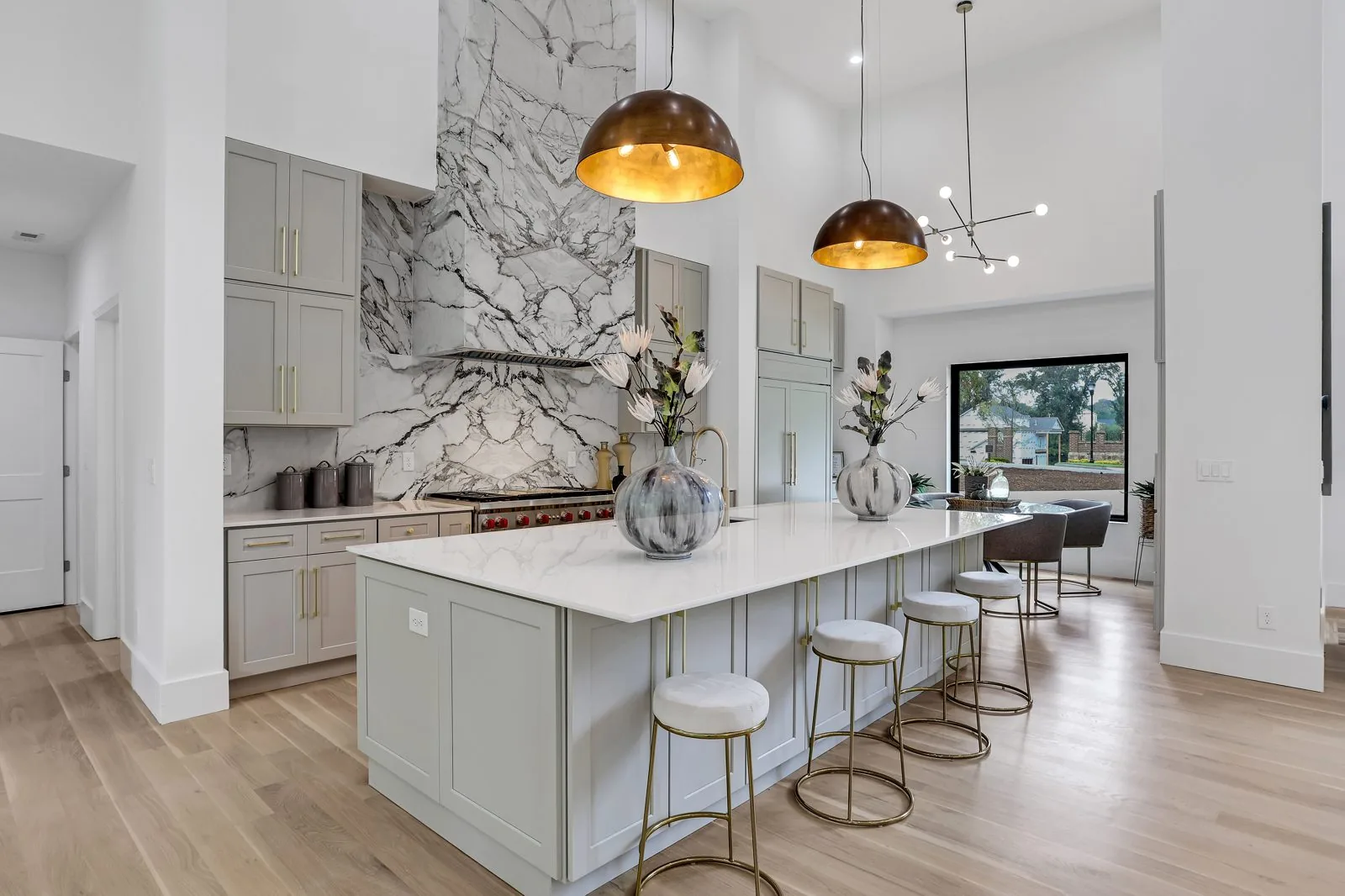
What is a book-matched slab?
When a block of stone is sawn into slabs, each slab comes off in sequence — like slicing a loaf — so two neighboring slabs have almost identical veining. Book-matching takes two of those sequential slabs, flips one over as if opening a book, and sets them side by side, so one slab's pattern becomes the mirror image of the other across the seam. The result is a symmetrical, almost Rorschach-like reflection that reads as a single deliberate image rather than two separate pieces. It's one of the oldest and most prized ways to present natural stone, and it's what we reach for when a client wants one surface in the home to be unforgettable.
How is book-matching done?
The craft happens before anything is cut. First we select the right bundle of sequential slabs from one block — random slabs of the same stone won't line up, so they have to be bookable pieces cut in order. Then we do a dry layout, physically or digitally arranging the slabs to find where the mirror is most dramatic and how the seam should fall. We plan cutouts, outlets, and openings around the focal veining so nothing interrupts the pattern, and we set seam placement so the symmetry reads cleanly. Only then does fabrication begin. Coming from the slab-distribution side of the business, reading stone movement and planning that layout is the step we care most about — it's what separates a stunning book-match from a near miss.
Book-matching vs. vein-matching — what's the difference?
They're related and often used together, but they aim at opposite effects. Book-matching mirrors two slabs so the veining reflects symmetrically across the seam — the goal is a bold, symmetrical image. Vein-matching aligns the veining across a seam so the pattern appears to flow continuously, with no mirror — the goal is to make the seam disappear, such as where a counter meets a full-height backsplash or wraps a waterfall island. A single project often uses both: a book-matched feature wall, with vein-matched seams carrying the counter material up the wall. Knowing which one a design needs is half the job.
Where do book-matched slabs look best?
Book-matching needs room to read, so it shines on large, uninterrupted focal surfaces. The favorites are fireplace surrounds and floor-to-ceiling feature walls, where the mirrored veining becomes the centerpiece of the room; waterfall islands, where the pattern can be mirrored and carried down the sides; full-height backsplashes behind a range; and shower and bathroom walls, where book-matched marble creates a spa-like statement. It's a poor fit for small, chopped-up areas with lots of cutouts, because the symmetry gets lost. The classic move is to pick the one wall or island you want guests to remember and make it the book-match.
Which stones and materials can be book-matched?
Any natural stone sold in sequential slabs from one block can technically be book-matched, but the effect is dramatic only on stones with bold, directional veining — statement marbles, quartzites, onyx, and some exotic granites. Uniform, speckled, or very busy random patterns show little benefit, since there's no clear vein to reflect. Large-format porcelain is a strong alternative: many porcelain lines are produced as book-match panel sets made to be mirrored, giving the look without natural-stone sourcing limits — ideal for big walls and façades. Engineered quartz rarely book-matches convincingly, because it's made for consistency and usually lacks strong veining. For the fuller material trade-offs, see our porcelain vs. quartz vs. natural stone guide.
How many slabs does a book-match need?
The minimum is two sequential slabs from the same block. Bigger compositions use four or more in a repeating mirror — a four-way book-match reflects the pattern both across and up a panel for a full symmetrical wall. What matters is that the slabs come from one block in cutting order; two random slabs of the same stone will not book-match. That's why these projects are planned before the stone is purchased, and why we reserve the full bundle of sequential slabs a design needs rather than sourcing them piecemeal. It also means availability is part of the decision: fall in love with a bundle, not just a sample.
Why does book-matching cost more?
A book-match costs more than a standard install for honest reasons. It usually means buying a matched bundle of sequential slabs — often more material than the raw square footage needs, because preserving a specific pattern increases layout and waste. It requires careful dry-layout and planning before a single cut, since a mirror only works if the slabs are oriented and seamed exactly right. And it takes experienced fabrication to place the seam, land the mirror, and handle large, sometimes fragile pieces safely. What you get back is a genuinely custom, high-impact feature that can't be replicated. Because the number depends on the specific stone and design, we quote book-matched work from the actual project rather than a per-square-foot rule of thumb — our guide on what drives countertop cost explains the levers.
The Prime Surfaces take
Book-matching is proof-of-craft — the kind of work that rewards a fabricator who reads stone for a living. Our roots are in importing and distributing slabs from Brazil, Spain, and Italy, so selecting the right bundle, judging the movement, and planning the mirror is second nature to us, whether the project is a marble fireplace, a waterfall island, or a porcelain feature wall. If there's one surface in your home or project you want to be the showstopper, this is how it's made. Tell us the room and the look you're after and we'll help you choose a stone that book-matches beautifully — working directly with homeowners and designers, or install-only for builders who supply their own material.
FAQ
What does book-matched mean?
Book-matching is a slab-layout technique where two consecutive slabs cut from the same block of stone are opened like the pages of a book and placed side by side, so the veining on one is a mirror image of the veining on the other. Because the two slabs were cut one after the other, their patterns are nearly identical, and mirroring them creates a symmetrical, butterfly-like reflection across the seam. The effect turns an ordinary wall, island, or fireplace into a single dramatic composition. It's one of the oldest and most prized ways to showcase natural stone, and it depends entirely on having sequential slabs from the same block.
What's the difference between book-matching and vein-matching?
They're related but not the same. Book-matching mirrors two slabs so the veining reflects symmetrically across the seam, like a Rorschach pattern — the goal is a dramatic, symmetrical image. Vein-matching aligns the veining across a seam so the pattern appears to flow continuously from one piece to the next, with no mirroring — the goal is to make a seam disappear, such as where a countertop meets a backsplash or wraps a waterfall island. Many projects use both: a book-matched feature wall, with vein-matched seams running the counter material up a backsplash. We plan the layout for whichever effect the design calls for.
Can any stone be book-matched?
In principle any natural stone sold in sequential slabs from the same block can be book-matched, but the effect is far more striking on stones with bold, directional veining. Dramatic marbles, quartzites, and some exotic granites and onyx are the classic choices because their movement makes the mirror symmetry obvious and beautiful. Stones with a uniform, speckled, or very busy random pattern show little benefit, since there's no clear veining to reflect. The other requirement is practical: the slabs must be bookable sequential pieces from one block, so availability matters. We help clients choose stone with book-matching in mind from the start.
Can porcelain or quartz be book-matched?
Large-format porcelain can give a book-matched look, and many manufacturers actually produce book-match panel sets designed to be mirrored, so the dramatic veined effect is available without natural-stone sourcing constraints — a real advantage on big feature walls and façades. Engineered quartz is harder to book-match convincingly: because it's manufactured for consistency, most quartz lacks the strong directional veining that makes a mirror read, though a few veined quartz designs can approximate it. If you love the book-matched look but want low maintenance, porcelain is usually the better route. Because we install stone, porcelain, and quartz, we'll match the material to the effect you want.
How many slabs do you need for a book-match?
A basic book-match needs at least two sequential slabs from the same block. Larger compositions use four or more slabs arranged in a repeating mirror — four-way book-matches create a full symmetrical panel where the pattern reflects both horizontally and vertically. The key is that the slabs come from the same block in cutting order, so their veining lines up; buying two random slabs of the same stone will not book-match. This is why book-matched projects should be planned before the stone is purchased, and why we reserve the full bundle of sequential slabs a design needs rather than sourcing them piecemeal.
Where does book-matching look best?
Book-matching shines anywhere you want a large, uninterrupted focal surface. The most popular places are fireplace surrounds and floor-to-ceiling feature walls, where the mirrored veining becomes the centerpiece of the room; waterfall islands, where the pattern can be mirrored and carried down the sides; full-height backsplashes behind a range; and shower and bathroom walls, where book-matched marble creates a spa-like statement. It's less suited to small, chopped-up areas with lots of cutouts, because the symmetry needs room to read. We most often use it on the one wall or island a client wants to be unforgettable.
Why does book-matching cost more?
Book-matching costs more than a standard installation for a few honest reasons. It usually requires buying a matched bundle of sequential slabs — often more material than the square footage alone would need, since layout and waste go up when you have to preserve a specific pattern. It demands careful dry-layout and planning before any cutting, because a mirror only works if the slabs are oriented and seamed exactly right. And it takes experienced fabrication to place the seam, match the mirror, and handle large, sometimes fragile pieces. The payoff is a genuinely custom, high-impact feature. The honest number comes from the specific stone and design, so we quote it from the actual project.
How do you make sure a book-match looks right?
The work happens before anything is cut. We start by selecting the right bundle of sequential slabs and reviewing them together, then do a dry layout — physically or digitally arranging the slabs to find where the mirror is most dramatic and how the seam should fall. We plan cutouts, outlets, and openings around the pattern so they don't interrupt the focal veining, and we decide seam placement so the symmetry reads cleanly. Only then do we cut. Coming from the slab-distribution side of the business, reading stone movement and planning that layout is exactly the step we care most about — it's what separates a stunning book-match from a near miss.
Related guides: Waterfall Islands · Full-Height Backsplashes: Slab vs. Tile · Quartzite vs. Marble
Want a showstopper book-matched feature?
Tell us the room and the look you're after — we'll help you choose a stone or porcelain that book-matches beautifully and plan the layout before anything is cut.