
What Is Sintered Stone? (Dekton & Neolith, Explained)
Short answer: sintered stone is an ultra-compact surface made from natural minerals compacted under extreme pressure and fired at over 2,000°F — a process called sintering that fuses them into one dense slab with no resins or plastic binders. For countertops it means the same thing as large-format porcelain, and brands like Dekton, Neolith, and Porcelanosa are all sintered surfaces. Because it is fired, not glued, it is non-porous, never needs sealing, and shrugs off heat, scratches, stains, and UV — the only common countertop family rated for outdoor use. The one real trade-off is that its thin, hard slabs demand a skilled fabricator. We are certified to install it — here is the plain-English explainer.
By Leo Chuahy · Prime Surfaces — certified installer of Neolith, Dekton, Porcelanosa & Daltile Panoramic
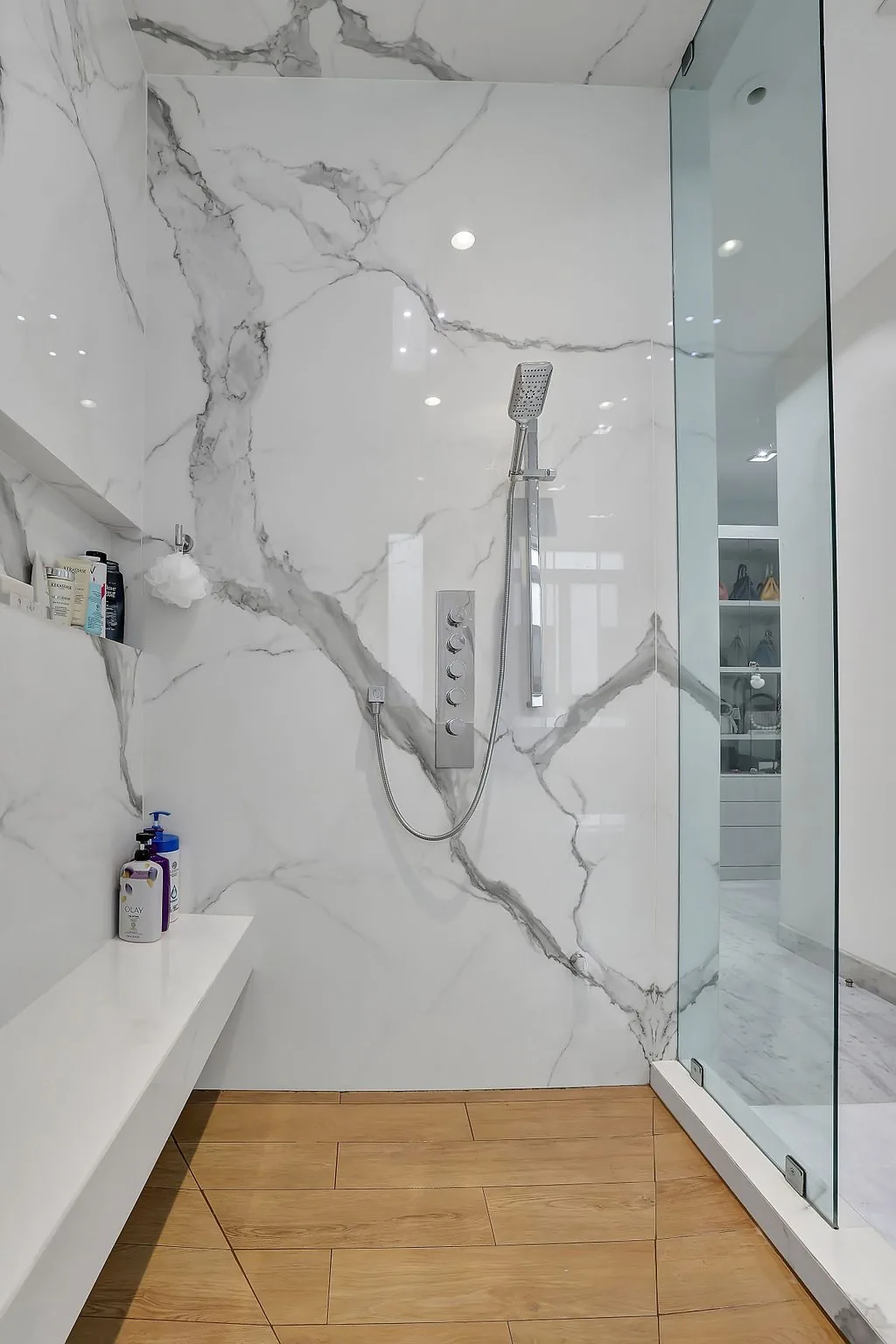
What is sintered stone, exactly?
Sintered stone is a slab made almost entirely of natural minerals — quartz, feldspar, silica, and clays — that are pressed under enormous pressure and fired at extreme heat until the particles fuse into a single, ultra-dense surface. There are no resins or plastic binders holding it together, which is the key difference from engineered quartz. That fired, glass-hard structure is what makes it non-porous and so resistant to heat, scratching, staining, and fading. It comes in very large, thin slabs, so you can run a counter, a wall, or even a building exterior with minimal seams.
How is sintered stone made?
The name comes from sintering: applying heat and pressure to compact a powder into a solid without fully melting it. Manufacturers press the mineral blend into a slab, then fire it at over 2,000°F. The heat vitrifies the material — essentially turning it into a dense, stone-like ceramic — in a way that mimics, in hours, the heat and pressure that form natural stone over millennia. Because the color and pattern can be built through the body of the slab, many sintered stones look convincingly like marble or natural stone while performing far better on heat and wear.
Is sintered stone the same as porcelain?
For countertops and surfaces, yes — the terms are used interchangeably. Large-format porcelain is produced by sintering, so the same slabs get called “sintered stone” or “large-format porcelain” depending on who is talking. Technically, sintering is the method and porcelain is the fired ceramic result, but in practice they describe the same category of ultra-compact, non-porous slab. Do not let the two words confuse you: a shop that says sintered stone and one that says porcelain are pointing at the same product.
Sintered stone vs. quartz: what is the difference?
The difference is what binds them. Sintered stone fuses natural minerals with heat and pressure and contains no resin, so it can take a hot pan, resist UV, and go outdoors. Engineered quartz is roughly 90% ground quartz bound with resin, which makes it non-porous and beautifully uniform but heat-sensitive and prone to fading in sun — so quartz is indoor-only and needs trivets. Neither needs sealing. Sintered stone wins on heat and UV; quartz offers a softer, more consistent look and is often a friendlier indoor price. Our porcelain vs. quartz guide compares them in full.
What is sintered stone good for?
Almost everything, indoors and out. It makes seamless kitchen counters and waterfall islands, full-height backsplashes and feature walls, floors, fireplace surrounds, and shower walls — and, because it is UV- and freeze-thaw-stable, outdoor kitchens, exterior cladding, and ventilated facades, which is one of our signature specialties. Very few surfaces can do a kitchen counter and a building exterior equally well; sintered stone is one of them.
Does sintered stone have any downsides?
One real one: fabrication difficulty. The slabs are thin, hard, and rigid, so a sharp impact on an unsupported edge can chip, and a slab can crack if it is mishandled, poorly supported, or cut without the right tooling. That is not a reason to avoid the material — it is the reason to have it installed by a certified specialist. Proper substrate support, mitered edges, and a smart seam plan solve it, and once it is in, sintered stone is about as durable and low-maintenance as a surface gets.
Dekton, Neolith, and the brands
Dekton (by Cosentino), Neolith, Porcelanosa, Laminam, and others are all sintered stone / large-format porcelain lines, and Prime Surfaces is a certified installer of Neolith, Dekton, and Porcelanosa. They perform similarly — the visible difference is usually the specific color, finish, and slab size rather than the brand. If you are deciding between two of them, our Neolith vs. Dekton guide walks through where they differ, and our porcelain vs. quartz vs. natural stone guide puts sintered stone in context against the other materials.
FAQ
What is sintered stone?
Sintered stone is an ultra-compact surface made from natural mineral particles (things like quartz, feldspar, and clays) compacted under extreme pressure and fired at very high temperature, over 2,000 degrees Fahrenheit. That process, called sintering, fuses the particles into a single dense slab without the resins or plastic binders used in engineered quartz. The result is a non-porous material that is highly resistant to heat, scratches, stains, and UV, and comes in very large, thin slabs. For countertop purposes, sintered stone and large-format porcelain mean the same thing.
Is sintered stone the same as porcelain?
For countertops and surfaces, yes, the terms are used interchangeably. Large-format porcelain is made by sintering, so brands and fabricators often call the same slabs sintered stone or large-format porcelain depending on the audience. Technically, sintering is the manufacturing method and porcelain describes the fired ceramic result, but in practice you will hear both words for the same product. If a shop tells you a surface is sintered stone or porcelain, they are describing the same category of ultra-compact, non-porous slab.
What is the difference between sintered stone and quartz?
The big difference is what holds them together. Sintered stone fuses natural minerals with heat and pressure and contains no resin, so it can take a hot pan, resist scratches and UV, and be used outdoors. Engineered quartz is about 90 percent ground quartz bound with resin, which makes it non-porous and consistent in look, but the resin is heat-sensitive and fades in sun, so quartz is indoor-only and needs trivets. Neither needs sealing. In short, sintered stone is tougher on heat and UV; quartz offers a softer, more uniform look and is often a friendlier price indoors.
Are Dekton and Neolith sintered stone?
Yes. Dekton (made by Cosentino) and Neolith are two of the best-known sintered stone / large-format porcelain brands, along with Porcelanosa, Laminam, and others. They are all ultra-compact surfaces produced by sintering, and all are non-porous, heat- and scratch-resistant, and rated for both interior and exterior use. Prime Surfaces is a certified installer of Neolith, Dekton, and Porcelanosa. If you are choosing between two of them, our Neolith vs. Dekton guide breaks down where they differ.
Is sintered stone good for kitchen countertops?
It is one of the best-performing countertop surfaces available. Sintered stone resists heat, scratches, stains, and UV, never needs sealing, and comes in large slabs so a counter and full-height backsplash can be done with very few seams. The one real trade-off is fabrication: the slabs are thin and hard, so a sharp impact on an unsupported edge can chip, and a poor seam or overhang shows. That is a reason to use a certified installer, not a reason to avoid the material. Handled by a specialist, it makes an exceptionally durable, low-maintenance kitchen.
Can sintered stone be used outdoors?
Yes, and this is one of its biggest advantages. Sintered stone is UV-stable and freeze-thaw stable, so it does not fade or degrade in sunlight or crack in cold the way many surfaces do. That is exactly why it is used for outdoor kitchens, exterior cladding, and ventilated facades, applications engineered quartz cannot handle because its resin fades and weakens in sun. If your project sees direct sun or weather, sintered stone (large-format porcelain) is the material built for it.
Does sintered stone chip or crack?
Sintered stone is extremely hard and scratch-resistant, but because the slabs are thin and rigid, a sharp, concentrated impact on an unsupported edge or corner can chip it, and mishandling during fabrication or transport can crack a slab. Properly fabricated, supported, and installed, it holds up beautifully for decades. This is precisely why it should be installed by a certified specialist with the right tooling and technique rather than treated like a standard countertop drop-off, the fabrication is where problems are prevented.
Does sintered stone need to be sealed?
No. Sintered stone is non-porous, so it never needs sealing and will not absorb stains under normal use, one of the lowest-maintenance surfaces you can install. Everyday care is just mild soap and water or a pH-neutral cleaner and a soft cloth, with no abrasive pads or harsh chemicals. Unlike natural stone, there is no re-sealing schedule to keep up with. The only thing to know about sintered stone is not maintenance but fabrication, which is best left to a certified installer.
Related guides: Neolith vs. Dekton · Porcelain vs. Quartz · Porcelain vs. Quartz vs. Natural Stone
Planning a project in sintered stone?
Countertops, a full-height wall, an outdoor kitchen, or a facade — tell us what you have in mind and we’ll show you the right Dekton, Neolith, or Porcelanosa slabs and handle the install.