
Porcelain & Sintered Stone vs. Quartz: Which Is Tougher?
Short answer: for pure toughness, large-format porcelain (sintered stone) beats engineered quartz in the ways that matter most on a working surface. Porcelain is far more heat-resistant — you can set a hot pan on it, while quartz can scorch — and it's harder, more scratch-resistant, more UV-stable, and the only one of the two rated for outdoor use. Both are non-porous, stain-resistant, and never need sealing. Quartz still wins on a softer, uniform look, and it's a little more forgiving to fabricate. If you want the most durable surface — or anything outdoors — choose porcelain; if you want a consistent look at a friendly price for an indoor kitchen, quartz is excellent. We install both, so here's the honest comparison.
By Leo Chuahy · Prime Surfaces — founder and certified installer of Neolith, Dekton, Porcelanosa & Daltile Panoramic
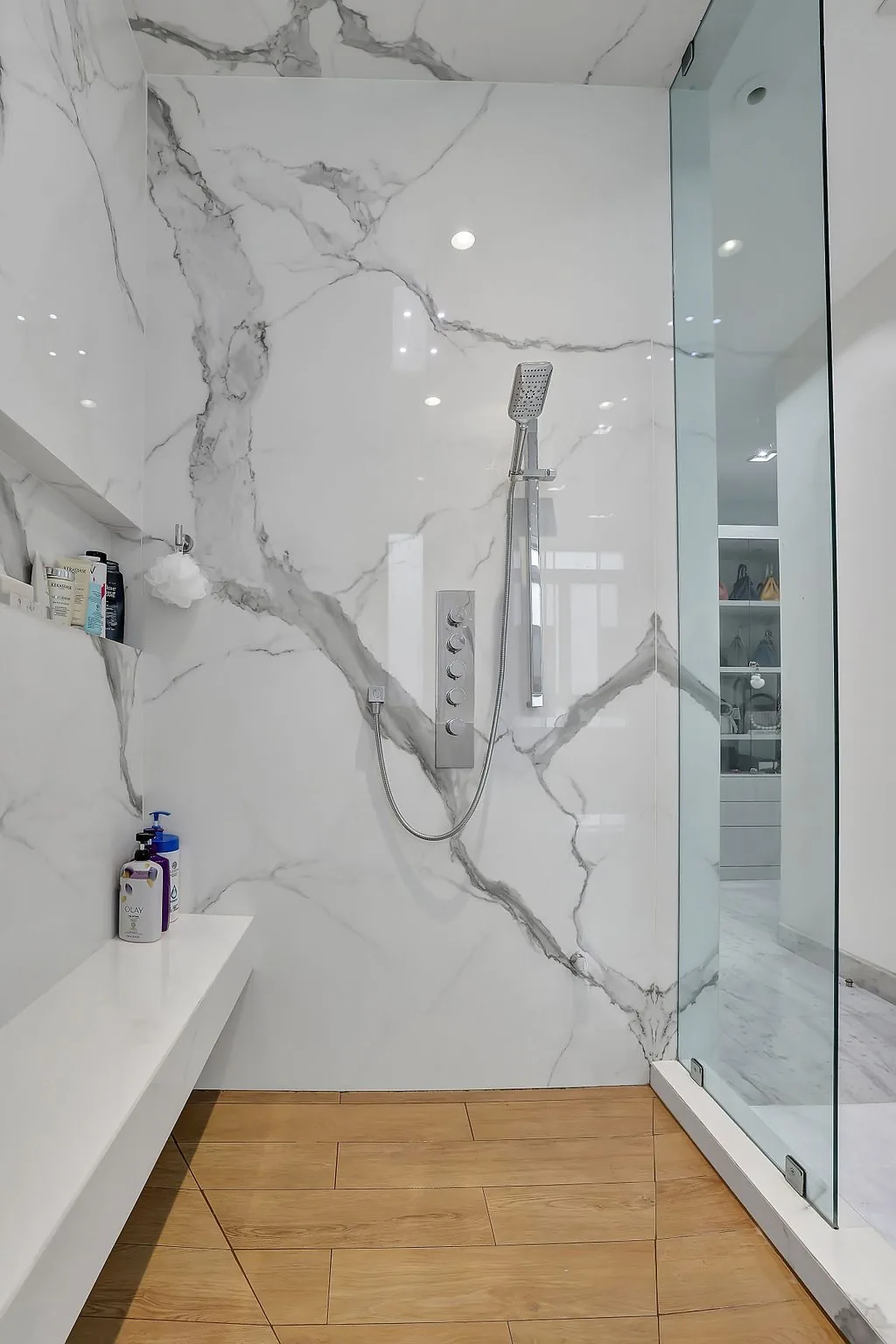
What's the difference between porcelain and quartz?
Large-format porcelain / sintered stone is made from natural minerals compacted and fired at over 2,000°F into an ultra-dense slab. Brands like Neolith, Dekton, and Porcelanosa come in very large, thin panels — big enough for seamless counters, full walls, and even building façades. It's non-porous, and it resists heat, scratches, stains, and UV.
Engineered quartz is about 90% ground natural quartz bound with resins and pigments. That resin is what makes quartz non-porous, consistent in color, and never in need of sealing — but it's also its weak point, because resin is sensitive to heat and to prolonged sun.
Which is more heat-resistant?
This is the clearest gap. Porcelain is born in a kiln, so a hot pot straight off the stove won't scorch or mark it. Quartz can't say the same — direct heat can scorch, yellow, or even crack the resin binder, which is why every quartz manufacturer tells you to use a trivet. If your household cooks hard and sets pans down without thinking, porcelain removes a real risk. We still suggest trivets on any surface to protect against thermal shock, but on heat alone, porcelain is tougher.
Which resists scratches better?
Porcelain is harder than quartz and sits near the top of the scratch-resistance scale, alongside natural quartzite. Quartz is durable and resists everyday wear well, but it can be marked by heavy abuse. In practice, both are tough enough that you should still cut on a board — mostly to protect your knives — but if scratch resistance is the deciding factor, porcelain edges it out.
Can you use them outdoors?
Only porcelain. It's UV- and freeze-thaw-stable, which is exactly why it's used for ventilated façades and outdoor kitchens. Quartz is an indoor material — sunlight can fade many colors and degrade the resin, and most quartz warranties exclude exterior use. Planning an outdoor kitchen, a pool bar, or anything that sees direct sun? The decision is made for you: porcelain.
Which stains, and which needs sealing?
Neither needs sealing and both resist staining, because both are non-porous — a big advantage over natural stone. Cleanup is identical: mild soap and water or a pH-neutral cleaner and a soft cloth, no abrasive pads or harsh chemicals. If low maintenance is your priority, porcelain and quartz are the two easiest surfaces we install; this is a tie.
Where does quartz still win?
Quartz isn't the runner-up in every category. It offers a soft, uniform, predictable look that some designs call for, with color carried all the way through the slab so edges and cutouts stay consistent. It's a bit more forgiving to fabricate than thin porcelain, and entry-level quartz is often the friendlier starting price. For a busy indoor family kitchen where you want zero fuss and a controlled look, quartz is a genuinely great answer.
So which is tougher — the honest answer?
On toughness, porcelain wins: more heat-, scratch-, and UV-resistant, and the only option rated for outdoors. The asterisk is that porcelain's thin, hard slabs demand a skilled fabricator — a bad edge or seam is where problems show up, which is why certification and experience matter more here than with any other surface. Quartz is the easier, more uniform, often less expensive indoor choice. Because we fabricate and install both, our recommendation follows your project — how you cook, where the surface lives, and the look you're after — not a single product line. Many of our favorite kitchens even combine the two.
FAQ
Is porcelain really tougher than quartz?
In most measures that matter on a working surface, yes. Large-format porcelain (sintered stone) is fired at over 2,000°F, so it far out-performs quartz on heat, and it's harder and more scratch- and UV-resistant. Both are non-porous and stain-resistant, and neither needs sealing. Quartz isn't fragile — it's an excellent, durable countertop — but where the question is pure toughness, porcelain wins. The one caveat is edges and unsupported spans: a thin porcelain slab needs a skilled fabricator, which is exactly the part we handle.
Can you put a hot pan on porcelain? What about quartz?
You can set a hot pan on porcelain — it's fired at extreme temperature and won't scorch or discolor. On quartz, never do it: the resin that binds engineered quartz can scorch, yellow, or crack from a pan straight off the burner. We still recommend a trivet on any surface to guard against thermal shock over time, but heat is the single clearest advantage porcelain has over quartz.
Does sintered stone scratch?
Sintered stone (porcelain) is one of the most scratch-resistant surfaces you can install — harder than quartz and hard enough that everyday use won't mark it. You should still cut on a board, because a ceramic knife or dropped grit can scratch any surface and cutting dulls your knives. But for scratch resistance in a busy kitchen, porcelain sits at the top of the list alongside quartzite.
Is porcelain or quartz better for an outdoor kitchen?
Porcelain, without question. It's UV-stable and freeze-thaw stable, which is why it's used on building façades and outdoor kitchens. Engineered quartz is an indoor-only material — direct sun can fade or discolor many quartz colors and can weaken the resin over time, and most quartz warranties exclude outdoor use. If your project sees sunlight, go porcelain. See our porcelain page for the systems we install.
Which is more expensive, porcelain or quartz?
The ranges overlap heavily and depend far more on the specific slab, thickness, finish, and the fabrication your project needs than on the category name. Premium porcelain and premium quartz can cost about the same; entry-level quartz is often the more budget-friendly starting point. Because installed cost is driven by edges, cutouts, and seams as much as the slab, the honest number comes from a real quote rather than a price-per-square-foot rule of thumb.
Do porcelain or quartz countertops need sealing?
Neither. Both are non-porous, so unlike natural stone they never need sealing and won't absorb stains under normal use. That makes them the two lowest-maintenance countertop families we install. Day-to-day care is the same for both: mild soap and water or a pH-neutral cleaner and a soft cloth — skip abrasive pads and harsh chemicals like bleach and ammonia.
Does porcelain chip on the edges?
This is porcelain's real trade-off. Because slabs are thin and hard, a sharp impact on an unsupported edge can chip it, and a poorly planned seam or overhang shows. That's a fabrication-and-installation issue, not a reason to avoid the material — proper substrate support, mitered edges, and a good seam plan solve it. It's the main reason large-format porcelain should be installed by a certified specialist rather than treated like a standard countertop drop-off.
Is porcelain the same as sintered stone?
For countertop purposes, yes — the terms are used interchangeably. 'Sintered stone' describes how the material is made: natural minerals compacted and fired at very high temperature into an ultra-dense slab. Brands like Neolith and Dekton are large-format porcelain / sintered surfaces. If you're comparing two of them, our Neolith vs. Dekton guide breaks down where they differ.
Related guides: Porcelain vs. Quartz vs. Natural Stone · Neolith vs. Dekton · Quartz vs. Quartzite
Deciding between porcelain and quartz?
Tell us how you'll use the space and we'll show you the right slabs — indoors or out.