
The Most Durable Countertops, Ranked
Short answer, ranked for overall durability: 1) large-format porcelain (sintered stone) — the toughest all-around, heat-, scratch-, stain-, and UV-resistant and the only one rated for outdoors; 2) quartzite — one of the hardest natural stones, excellent on heat and scratches; 3) granite — very hard and heat-tolerant, a proven workhorse; 4) engineered quartz — durable and zero-maintenance indoors, but heat is its weakness; 5) marble — the most beautiful, the least durable, prone to etching and scratching. No single material wins every category, so the real question is which kind of durability matters most for your space. We fabricate and install all of them — here's the honest ranking.
By Leo Chuahy · Prime Surfaces — founder and certified installer (Neolith, Dekton, Porcelanosa & Daltile Panoramic)
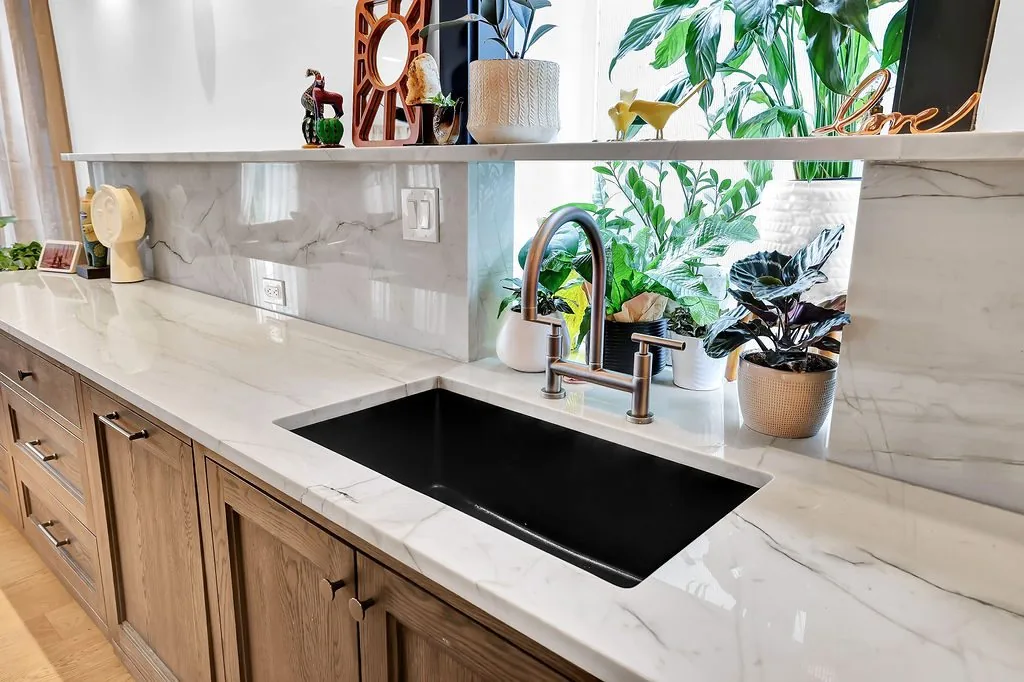
What makes a countertop “durable”?
“Durable” isn't one thing — it's five, and almost no material wins them all. The dimensions that matter on a real countertop are scratch resistance (hardness), heat resistance, stain resistance (tied to porosity), etch resistance (whether acids dull the surface), and UV stability (whether sunlight fades it). A material can be nearly scratch-proof yet vulnerable to heat, or stain-proof yet soft. The ranking below weighs all five for everyday use, which is why the most versatile surfaces rise to the top — but the right pick for you depends on which of these you'll actually test.
1. Large-format porcelain / sintered stone
The most durable countertop overall. Large-format porcelain (brands like Neolith and Dekton) is made from natural minerals fired at over 2,000°F into an ultra-dense slab. It's non-porous (never needs sealing, highly stain-resistant), among the hardest surfaces for scratch resistance, essentially impervious to heat — you can set a hot pan on it — and the only common countertop that's UV-stable and rated for outdoor use. Its one trade-off is that its thin, hard slabs demand a skilled fabricator: a sharp blow to an unsupported edge can chip it, and seams and overhangs need proper support. That's a fabrication issue, not a weakness in the material — and it's exactly the part a certified installer handles.
2. Quartzite
The toughest of the natural stones and a very close second. Quartzite rates around 7 on the Mohs hardness scale — hard enough to resist knife scratches and everyday grit — and it handles heat far better than quartz. True quartzite also doesn't etch from acids, so it gives you the drama of marble-like veining without the dull spots. Its one maintenance note: as a natural stone it's porous, so it's sealed at installation and re-sealed periodically to resist staining. One honest warning — some slabs sold as “quartzite” are actually softer dolomitic marble that etches, so the stone should be tested, which is covered in our quartzite vs. marble guide.
3. Granite
A proven workhorse that's been the durable-countertop default for decades for good reason. Granite is very hard and highly scratch-resistant, and it handles heat very well. Like other natural stone it's generally porous and benefits from sealing, though some very dense granites absorb so little they rarely need it — the water test tells you when. Granite doesn't etch the way marble does, and because it's a thicker, forgiving material, it tolerates a hard edge knock better than thin porcelain. It lands behind porcelain and quartzite mostly on stain-proofness and the sealing it asks for, but it remains one of the most durable surfaces you can install.
4. Engineered quartz
Extremely durable for everyday indoor use, and the best low-maintenance choice — with one real weakness. Quartz is about 90% ground natural quartz bound with resin, which makes it non-porous (never needs sealing, excellent stain resistance) and consistent in color. It's hard and resists scratches well. But that resin binder is its Achilles' heel: it can scorch from heat and can fade under UV, so always use a trivet and keep it indoors — most quartz warranties exclude outdoor use. For a worry-free indoor family kitchen it's a superb pick; it ranks fourth only because heat and sun are genuine limits. See our porcelain vs. quartz guide for the head-to-head.
5. Marble
The most beautiful surface on this list and, honestly, the least durable — a lifestyle choice rather than a worry-free one. Marble is a softer, calcium-based stone, so it scratches more easily and, crucially, it etches: acids like lemon, wine, and vinegar dissolve a microscopic layer and leave dull spots that no sealer prevents. It's also porous and needs sealing against staining. None of this means you can't use it — marble has graced kitchens for centuries and ages into a patina many owners love — but if durability is your priority, it ranks last. Want the marble look with far more toughness? A hard quartzite or marble-look porcelain delivers it; our marble maintenance guide covers living with the real thing.
So which should you choose?
Start with the room, not the ranking. An outdoor kitchen or anything in direct sun is porcelain, full stop. A hard-working family kitchen leans porcelain or quartzite for resilience, or quartz if zero maintenance matters most. A statement vanity or low-traffic bar is where marble earns its keep despite the softer nature. The “most durable” material only matters once it's the right material for how you'll use the space — and because we install all five, our recommendation follows your project rather than a single product line.
The Prime Surfaces take
Rankings are useful, but durability is never the whole story — look, budget, and how you live all weigh in, and the toughest surface is still the wrong one if it doesn't suit the room. What we tell every client is this: porcelain and quartzite are the ones to beat on raw durability, quartz is the low-maintenance champion indoors, granite remains a dependable workhorse, and marble is worth it when its beauty is the point and you'll care for it. Tell us how you cook, where the surface lives, and the look you're after, and we'll steer you to the right material — working directly with homeowners and designers, or install-only for builders who supply their own.
FAQ
What is the most durable countertop material?
Overall, large-format porcelain (sintered stone) is the most durable countertop material. It's fired at extreme temperature into an ultra-dense, non-porous surface that resists heat, scratches, stains, and UV, and it's the only common countertop rated for outdoor use. Natural quartzite is a close second — one of the hardest natural stones, highly scratch- and heat-resistant, though porous and in need of sealing. Granite and engineered quartz are both very durable for everyday indoor use, and marble is the softest of the group, beautiful but the most prone to etching and scratching. No single material wins every category, so the best choice depends on which kind of durability matters most for your space.
Is porcelain more durable than granite?
In most measures, yes. Large-format porcelain is harder, more scratch-resistant, more heat-resistant, non-porous so it never needs sealing, and UV-stable for outdoor use — granite is porous and usually needs periodic sealing, and while it handles heat very well it isn't quite as hard or stain-proof as porcelain. Granite's advantage is that it's a thicker, more forgiving material to fabricate and can take a hard knock on an edge better than thin porcelain. For raw durability porcelain leads, but both are excellent, long-lasting surfaces, and the right pick often comes down to look and budget as much as toughness.
Is quartz or quartzite more durable?
Quartzite is the more durable of the two in the ways that matter most on a working surface. As a natural stone it's extremely hard and scratch-resistant and it handles heat far better than engineered quartz, whose resin binder can scorch from a hot pan and can fade in direct sun. Quartz's edge is maintenance: it's non-porous and never needs sealing, while quartzite is porous and must be sealed periodically. So quartzite wins on hardness and heat, quartz wins on zero-maintenance and consistency. They're different materials despite the similar names — our quartz vs. quartzite guide covers the distinction in full.
What is the most scratch-resistant countertop?
Large-format porcelain and natural quartzite are the most scratch-resistant countertops, sitting at the top of the hardness scale — around 7 on the Mohs scale for quartzite, with porcelain comparably hard. Engineered quartz and most granite are also very scratch-resistant for everyday use, well ahead of marble, which is soft enough to be marked by grit or a dragged pan. That said, you should still cut on a board on any surface: it's mostly to protect your knives, since even the hardest countertop can be scratched by a ceramic blade or hard grit, and cutting directly voids most warranties.
What is the most heat-resistant countertop?
Large-format porcelain is the most heat-resistant — it's fired at over 2,000°F, so a hot pot straight off the stove won't scorch or discolor it. Natural stones like quartzite and granite also handle heat very well. The clear exception is engineered quartz: its resin binder can scorch, yellow, or crack from direct high heat, which is why every quartz manufacturer tells you to use a trivet. Even on the most heat-resistant surfaces we recommend trivets to protect sealers and guard against thermal shock over time, but if you set hot pans down without thinking, porcelain removes the most risk.
Which countertop is best for a busy family kitchen?
For a hard-working family kitchen, large-format porcelain and quartzite are the toughest choices — both shrug off heat and scratches — while engineered quartz is the best low-maintenance all-rounder because it's non-porous and never needs sealing. Many families choose quartz for the no-sealing convenience, or quartzite if they want natural stone that resists daily wear. Marble is beautiful but a lifestyle choice that will pick up etching and patina. The honest answer depends on whether you'd rather never seal, never worry about heat, or have one-of-a-kind natural stone. Because we install all of them, we match the material to how you actually cook and live.
Is marble durable enough for a kitchen?
Marble can absolutely be used in a kitchen — it's been used for centuries — but it's the least durable of the common countertop materials and it's an honest lifestyle choice. It's softer, so it scratches more easily, and it's a calcium-based stone, so acids like lemon, wine, and vinegar will etch it, leaving dull spots that no sealer prevents. Many owners come to love the soft patina marble develops; others find it frustrating. If you want the marble look with far more durability, a hard quartzite or a large-format porcelain that mimics marble gives you the aesthetic without the worry. Our marble maintenance guide explains how to live with it well.
What's the most durable countertop for outdoors?
Large-format porcelain (sintered stone) is the most durable outdoor countertop and really the only engineered option suited to it: it's UV-stable and freeze-thaw stable, which is why it's used for building façades and outdoor kitchens. Most natural stones like granite can also be used outdoors with care. Engineered quartz is the one to avoid outside — direct sun can fade many quartz colors and degrade the resin, and most quartz warranties exclude exterior use. If your project sees sunlight, the decision is effectively made for you: go porcelain. Our outdoor-kitchen guide ranks the options for patios and grill stations in detail.
Want the right durable surface for your space?
Tell us how you cook, where the surface lives, and the look you're after — we install all five materials and will match the one that fits.