
Dekton vs. Quartz vs. Granite for Outdoor Kitchens
Short answer: for an outdoor kitchen, Dekton — a large-format porcelain / sintered stone — is the best all-around choice. It is UV-stable, freeze-thaw stable, non-porous, and resists heat, scratches, and stains, so it takes full Georgia sun and weather with almost no upkeep and never needs sealing. Granite is the classic natural-stone runner-up — heat-tolerant and durable outdoors, holds its color well, but it is porous, so it must be sealed at installation and re-sealed periodically. Quartz should not go outside at all: its resin binder fades and weakens in sunlight, and most quartz warranties exclude outdoor use. So the honest ranking is porcelain first, granite second, quartz indoor-only. We fabricate and install all three — here is the outdoor comparison, without the bias of a shop that sells just one.
By Leo Chuahy · Prime Surfaces — certified installer of Neolith, Dekton, Porcelanosa & Daltile Panoramic
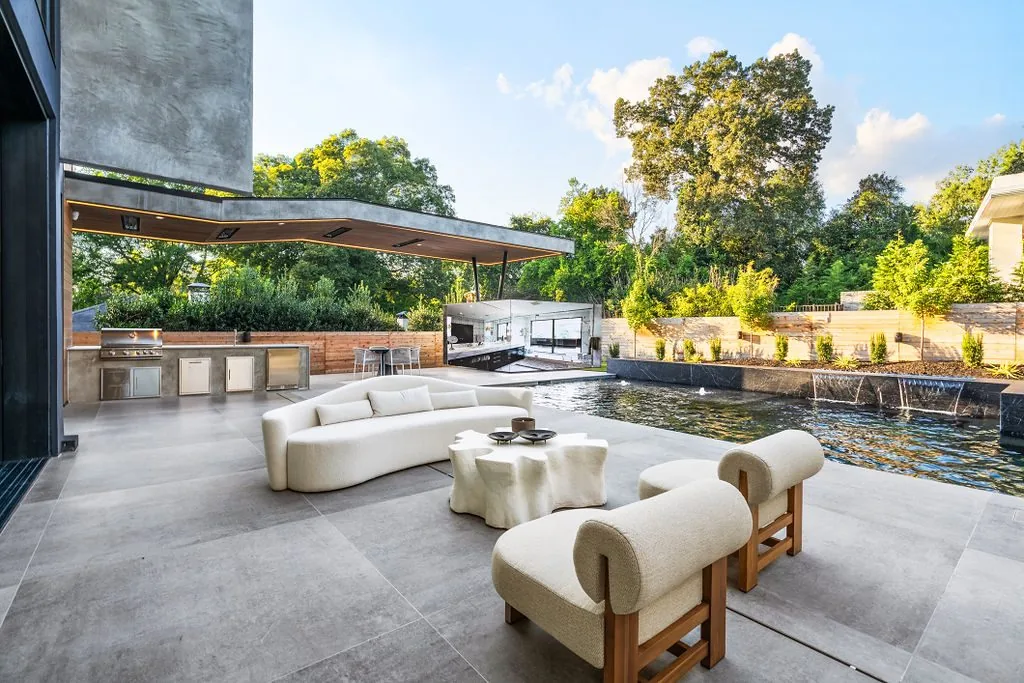
What's the best countertop for an outdoor kitchen?
An outdoor kitchen asks more of a countertop than an indoor one: full sun, wide temperature swings, rain and humidity, grease and marinades, and heat from a grill inches away. The material that handles all of that best is large-format porcelain / sintered stone — Dekton, Neolith, and the like. Granite is the strong natural-stone alternative and has served outdoor kitchens well for years. Engineered quartz, despite being a superb indoor surface, is the one to rule out. Below is why each lands where it does.
Why is Dekton (porcelain) the top pick for outdoors?
Dekton is a sintered stone — natural minerals fired at extreme temperature into an ultra-dense, non-porous slab with no resin binder. That structure is exactly what an exterior surface needs. It is UV-stable, so it will not fade in years of direct sun; freeze-thaw stable, so it resists cracking through Georgia's cold snaps; and heat-, scratch-, and stain-resistant, so grill splatter and hot grates are no threat. It never needs sealing. It is the same class of material we install on building façades, which is the ultimate proof it can live outdoors. The one caveat is fabrication: thin, hard porcelain needs a certified installer to handle edges, seams, and support — which is the part we specialize in.
Can you use granite in an outdoor kitchen?
Yes — granite is a proven outdoor surface and the best of the traditional natural stones for the job. It is igneous rock, so it is very heat-tolerant and hard-wearing, and quality granite holds its color well under sun. The trade-off is that granite is porous: outdoors it should be sealed at installation and re-sealed periodically so grease, marinades, and standing water don't stain or soak in. Left unsealed in a wet, sunny spot, it can also let water work into the stone over many freeze-thaw seasons. Sealed and cleaned routinely, granite is a durable, handsome outdoor counter — it simply asks for a bit more maintenance than porcelain.
Can you put quartz outside?
No. This is the clearest verdict in the comparison. Engineered quartz is about 90% ground quartz bound with resin, and that resin is the problem outdoors: ultraviolet light fades and discolors many quartz colors and degrades the binder over time, so a beautiful quartz counter can look blotchy and chalky after a season or two in the sun. Just as important, most quartz manufacturers exclude outdoor use from their warranties, so an outdoor install can leave you with no coverage. If you love quartz's clean, uniform look, porcelain gives you a similar aesthetic that is actually built for the sun. Our porcelain vs. quartz guide covers this in depth.
Dekton vs. granite vs. quartz outdoors, at a glance
UV / fading. Porcelain: excellent, will not fade. Granite: very good. Quartz: poor — fades and degrades.
Heat. Porcelain and granite: both excellent. Quartz: can scorch even indoors.
Sealing. Porcelain: never. Granite: yes, at install and periodically. Quartz: n/a (indoor-only).
Freeze-thaw / weather. Porcelain: freeze-thaw stable. Granite: durable but sealing matters. Quartz: not rated for outdoors.
Look. Porcelain: huge slabs, marble-look or stone-look, few seams. Granite: unique natural veining. Quartz: uniform — but not an outdoor option.
Does an outdoor countertop have to handle Georgia's weather?
Absolutely, and it is worth designing for. An Atlanta-area outdoor kitchen sees hot, humid summers, heavy afternoon storms, and winter freeze-thaw cycles. That argues for a non-porous, UV- and freeze-thaw-stable surface (porcelain) or a well-sealed, heat-tolerant natural stone (granite). It also argues for good installation: proper slope and drainage so water doesn't pool, solid support under the slab, and weather-appropriate seams. The material choice and the build quality together determine whether your counter still looks great in ten years. This is exactly the kind of harder application we take on for homeowners and builders.
Which is easiest to maintain outdoors?
Porcelain, by a comfortable margin. Because it is non-porous, an outdoor porcelain counter cleans up with mild soap and water and never needs sealing — a real advantage on a surface that faces grease, pollen, and rain. Granite is easy to clean too, but the periodic re-sealing is an ongoing task you can't skip outdoors without risking stains. Quartz is low-maintenance indoors but, again, doesn't belong outside. If “install it and forget it” is your goal for the patio, large-format porcelain is the answer.
So which should you choose?
Choose Dekton or another large-format porcelain if you want the toughest, lowest-maintenance outdoor counter that never needs sealing and won't fade — our default recommendation for most outdoor kitchens. Choose granite if you love natural stone's one-of-a-kind veining and don't mind sealing it periodically. Skip quartz outdoors entirely — save it for the indoor kitchen where it shines. Because we fabricate and install all three, our recommendation follows your patio, your climate, and the look you want, not a single product line. Tell us how you'll use the space and we'll steer you to the right surface.
FAQ
What is the best material for an outdoor kitchen countertop?
Large-format porcelain / sintered stone, such as Dekton or Neolith, is the best all-around outdoor kitchen countertop. It is UV-stable, freeze-thaw stable, non-porous, and highly resistant to heat, scratches, and stains, which is why it is also used on building exteriors. Granite is the classic natural-stone outdoor option and performs well, but it is porous and needs sealing. Engineered quartz should not be used outdoors, because its resin binder fades and can weaken in direct sun. For a countertop that shrugs off Georgia sun, heat, and weather with the least upkeep, porcelain is the top pick.
Can quartz be used outdoors?
No, engineered quartz is an indoor-only material and should not be installed in an outdoor kitchen. The roughly 10 percent resin that binds the ground quartz is sensitive to ultraviolet light, so direct sun can fade or discolor the surface and weaken the resin over time. Most quartz manufacturers explicitly exclude outdoor use from their warranties, so an outdoor install can also void your coverage. If you love the uniform look of quartz, the outdoor equivalent is large-format porcelain, which offers a similarly clean, consistent appearance and is built for sun and weather.
Does granite fade outdoors?
Granite is far more UV-stable than quartz and holds its color well outdoors, which is why it has been a popular outdoor kitchen surface for years. Over many years of intense sun some darker or dyed granites can lighten slightly, but reputable natural granite generally weathers well. The bigger maintenance point outdoors is that granite is porous, so it must be sealed at installation and re-sealed periodically to resist stains from grease, marinades, and standing water. With sealing and routine cleaning, granite is a durable, heat-tolerant outdoor choice.
Is Dekton good for an outdoor kitchen?
Yes, Dekton is one of the best outdoor kitchen surfaces available. It is a sintered stone / large-format porcelain made by Cosentino, fired at extreme temperature into an ultra-dense, non-porous slab that resists UV fading, heat, scratches, stains, and freeze-thaw cycles. That combination is exactly what an outdoor counter needs, and it never requires sealing. The one thing to know is that its thin, hard slabs need a certified fabricator for edges, seams, and support. Prime Surfaces is a certified installer of Dekton, Neolith, and Porcelanosa.
Do outdoor countertops need to be sealed?
It depends on the material. Granite and other natural stones are porous, so outdoors they should be sealed at installation and re-sealed periodically to resist stains and standing-water marks. Large-format porcelain and sintered stone such as Dekton and Neolith are non-porous and never need sealing, which is a real maintenance advantage outdoors where a counter faces rain, grease, and sun. Quartz is non-porous too but should not be used outdoors at all. So among good outdoor choices, granite needs sealing and porcelain does not.
Can you put a hot grill grate or pan on Dekton or granite?
Both Dekton (porcelain) and granite handle heat very well, which matters in an outdoor kitchen surrounded by a grill and side burners. Porcelain is fired at over 2,000 degrees Fahrenheit, so a hot grate or pan will not scorch or discolor it. Granite is natural igneous stone and is also highly heat-tolerant. We still recommend a trivet or grate rest on any surface to guard against thermal shock over time and, on granite, to protect the sealer. What you should never do outdoors is set a hot pan on quartz, which is one more reason quartz stays indoors.
Will an outdoor countertop crack in winter?
The risk depends on the material and the install. Large-format porcelain and sintered stone are freeze-thaw stable, meaning they resist the expansion and contraction that cold and moisture cause, so they are well suited to Georgia winters and even harsher climates. Granite is durable in cold but, being porous, can be damaged over many seasons if water gets into the stone and repeatedly freezes, which is another reason to keep it sealed. Proper installation, drainage, and support matter as much as the material, which is why an outdoor kitchen should be built by an experienced installer.
Which is more expensive for an outdoor kitchen, Dekton, granite, or quartz?
Pricing overlaps and depends far more on the specific slab, thickness, finish, edges, and the complexity of the outdoor install than on the category name. In general, premium Dekton and exotic granites sit at the higher end, while many standard granites are more accessible, and quartz is not a valid outdoor option regardless of price. Because installed cost is driven by fabrication and site conditions as much as the slab, the honest number for an outdoor kitchen comes from a real quote rather than a price-per-square-foot rule of thumb. Send us your project and we will price the exact material.
Related guides: Porcelain vs. Quartz · Neolith vs. Dekton · Porcelain vs. Quartz vs. Natural Stone
Planning an outdoor kitchen?
Tell us about your patio and how you'll use it, and we'll show you the right Dekton, Neolith, or granite slabs — and handle the install so it lasts.