
Choosing Countertops for a Busy Family Kitchen
Short answer: for a busy family kitchen, the most durable, lowest-stress countertops are large-format porcelain, quartzite, and quartz. Porcelain is the toughest overall — heat-, scratch-, stain-, and UV-resistant, and it never needs sealing. Quartz is the easiest to live with: non-porous, no sealing, wipes clean, and shrugs off spills — just use a trivet, because heat is its one weakness. Quartzite is the natural-stone choice that's genuinely hard and heat-tolerant, with occasional sealing the trade-off for real stone beauty. Marble is lovely but high-maintenance for family life. There's no single right answer — it comes down to how you cook, whether you want natural or engineered, and your budget. We install all of them, so here's the honest breakdown.
By Leo Chuahy · Prime Surfaces — founder and certified installer (Neolith, Dekton, Porcelanosa & Daltile Panoramic)
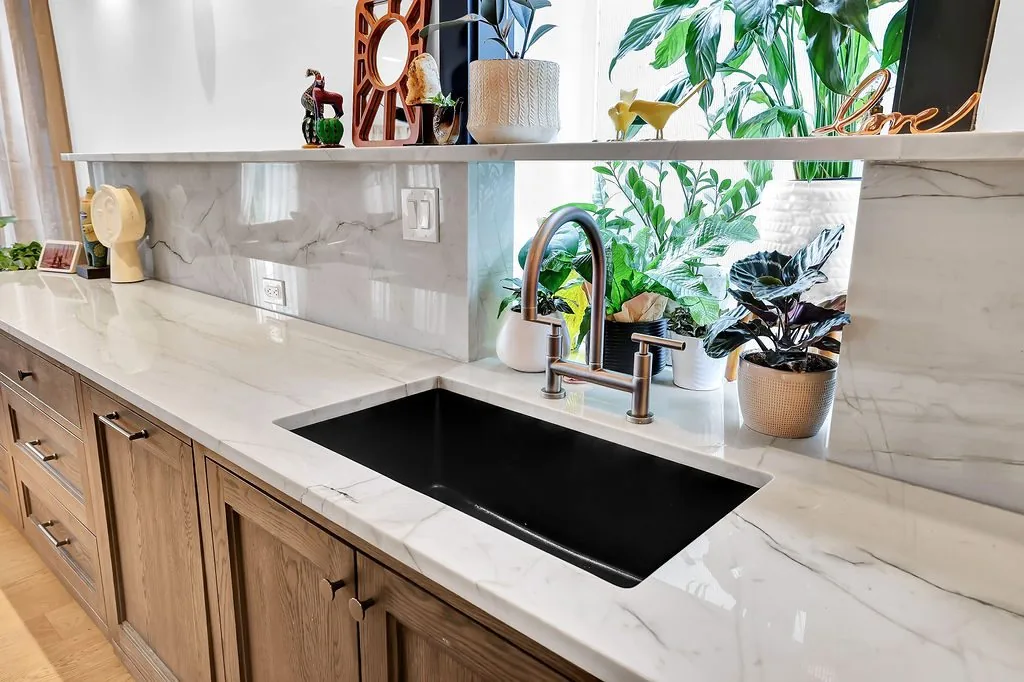
What's the most durable countertop for a busy family kitchen?
If pure toughness is the goal, three surfaces lead: large-format porcelain, quartzite, and quartz. Porcelain tops the list — fired at over 2,000°F, it resists heat, scratches, stains, and UV, and never needs sealing. Quartzite is a natural stone nearly as hard, excellent against scratches and heat, with periodic sealing as its only ask. Quartz is non-porous and virtually maintenance-free, beating back stains and everyday wear, with heat its lone weak spot. There's no universal winner — the right one depends on how you cook, whether you want natural or engineered, and your budget.
Is quartz the easiest choice for family life?
For sheer convenience, usually yes. Quartz is engineered to be non-porous, so it never needs sealing, resists stains from juice, wine, and tomato sauce, and wipes clean with mild soap and water. Its consistent color hides crumbs and daily mess, and it's extremely hard-wearing. The one limitation is heat: a pan straight off the burner can scorch the resin, so trivets aren't optional. If you want a surface you essentially never think about and don't mind reaching for a trivet, quartz is hard to beat in a family kitchen.
Quartz or quartzite — which suits a family with kids?
Both are great; the real question is engineered versus natural stone. Quartzite brings one-of-a-kind veining and is harder than marble, genuinely heat- and scratch-resistant — but it's porous, so it needs occasional sealing to fend off stains, worth weighing with kids who spill. Quartz never needs sealing and ignores stains, but can't take direct heat. A family that wants natural beauty and will keep up with light sealing leans quartzite; one that wants the absolute lowest upkeep leans quartz. Our quartz vs. quartzite guide breaks the two down in full.
What about large-format porcelain for families?
Porcelain — also called sintered stone, in lines like Neolith and Dekton — is the most family-proof surface we install. It's non-porous (no sealing), resists stains and scratches, and handles heat better than anything else, so a hot pan won't mar it. It also comes in convincing marble and stone looks, so you can get a dramatic island without the upkeep. The one thing to know isn't maintenance but fabrication: its thin, hard slabs need a skilled installer for clean edges and seams — exactly what a certified shop handles. For families that cook hard and clean fast, it's a standout.
Which handles heat, scratches, and spills best?
Heat: porcelain first, then quartzite and granite (trivets still smart); never set a hot pan on quartz. Scratches: porcelain and quartzite sit at the top, quartz close behind — but always cut on a board, mostly to save your knives. Spills and stains: the non-porous surfaces, quartz and porcelain, win because nothing soaks in; sealed quartzite and granite resist well with prompt cleanup. For the full after-install routine, see our countertop care guide. No surface is indestructible, but these three forgive real family life.
What about kids — markers, juice, and sticky messes?
This is where non-porous surfaces shine. On quartz and porcelain, spilled juice, spaghetti sauce, washable marker, and sticky fingerprints sit on top instead of soaking in, so they wipe away with mild soap and water and nothing stains. Sealed quartzite and granite hold up well too, as long as spills are wiped promptly and the stone is kept sealed. The materials we'd steer a young family away from for the main working zones are the softer, more reactive stones like marble, which can stain and etch from the acidic spills that come with kids.
Is marble a mistake in a family kitchen?
Not a mistake — a trade-off, and we'd rather you hear it straight. Marble is soft and porous, so in a busy kitchen it etches from acidic spills (citrus, tomato) and needs sealing and gentle cleaning. Some families cherish the lived-in patina; others find it stressful with little ones. If you love the marble look but want family-proof performance, quartzite or a marble-look porcelain or quartz gives you the aesthetic with far less worry. If you genuinely love real marble and accept its nature, a honed finish hides wear better than polished — our quartzite vs. marble guide covers the choice.
The Prime Surfaces take
For most busy families, we land on quartz when easy maintenance is everything, porcelain when you want the toughest, most heat-proof surface (and a dramatic look), and quartzite when you want real natural stone that still stands up to daily life. Marble we reserve for families who love it with eyes open or for lower-traffic spots. Because we fabricate and install all of them, our recommendation follows how your family actually uses the kitchen — not the one material we happen to sell. Tell us how you cook and clean, and we'll help you choose a surface that still looks great years from now.
FAQ
What is the most durable countertop for a busy family kitchen?
For a busy family kitchen, the most durable surfaces are large-format porcelain, quartzite, and quartz. Porcelain tops the list for sheer toughness: it resists heat, scratches, stains, and UV, and it never needs sealing. Quartzite is a natural stone nearly as hard, excellent against scratches and heat, though it needs periodic sealing. Quartz is non-porous and virtually maintenance-free, resisting stains and everyday wear beautifully, with heat as its one weak point. There's no single winner for every family; the best choice depends on how you cook, whether you want natural stone or an engineered look, and your budget.
Is quartz a good choice for a busy family kitchen?
Quartz is one of the best choices for a busy family kitchen and the one we recommend most often for pure convenience. It's engineered to be non-porous, so it never needs sealing, resists stains from juice, wine, and sauces, and wipes clean with just mild soap and water. The consistent color hides crumbs and everyday mess well, and it's extremely hard-wearing. Its one real limitation is heat: a pan straight off the burner can scorch the resin, so trivets are a must. If you want a worry-free surface and don't mind using a trivet, quartz is hard to beat for family life.
Quartz or quartzite for a family with kids?
Both are excellent, and the choice is really natural stone versus engineered. Quartzite is a natural stone with one-of-a-kind veining, harder than marble, and genuinely heat- and scratch-resistant, but because it's porous it needs sealing now and then to guard against stains, something worth weighing with kids who spill. Quartz is engineered, non-porous, never needs sealing, and shrugs off stains, but it can't take direct heat. For a family that wants natural beauty and will keep up with occasional sealing, quartzite wins; for one that wants the absolute lowest upkeep, quartz does. We install both and will match it to how your family actually uses the kitchen.
Can you put hot pans on these countertops?
It depends on the material, and this is one of the biggest practical differences for a family. Large-format porcelain is born in a kiln, so it handles a hot pan better than any other surface. Quartzite and granite take heat very well too, though we still suggest trivets to protect the sealer. Quartz is the exception: direct heat can scorch, yellow, or crack its resin binder, so you should never set a hot pan on it. In any busy kitchen we recommend trivets across the board as a simple habit, but if your household sets pans down without thinking, porcelain or quartzite removes that risk.
What countertop is easiest to clean with kids around?
The non-porous surfaces, quartz and porcelain or sintered stone, are the easiest to keep clean with kids, because nothing soaks in and both wipe down with mild soap and water or a pH-neutral cleaner. Spilled juice, spaghetti sauce, marker, and sticky messes sit on top rather than staining, so cleanup is fast and forgiving, and neither needs sealing. Natural stones like quartzite and granite clean up well too, but they're porous, so prompt wiping of spills and periodic sealing matter more. For sheer cleaning ease in a house full of kids, quartz and porcelain are the standouts.
Is marble a bad idea for a family kitchen?
Marble isn't a bad idea, but it's an honest trade-off, and we'd rather you know before you commit. Marble is softer and porous, so in a busy family kitchen it will pick up etching from acidic spills like citrus and tomato, and it needs sealing and careful cleaning. Some families love the patina it develops over time; others find it stressful with kids. If you adore the marble look but want family-proof performance, quartzite or a marble-look porcelain or quartz gives you the aesthetic with far less worry. If you truly love real marble and accept its nature, a honed finish hides wear better than polished.
Which countertop needs the least maintenance?
Quartz and large-format porcelain need the least maintenance of anything we install. Both are non-porous, so they never need sealing, don't absorb stains, and clean up with mild soap and water. Porcelain adds heat, scratch, and UV resistance on top of that, making it the most bulletproof overall, while quartz is the easiest for a consistent, uniform look as long as you use trivets. Natural stones, quartzite, granite, and marble, are beautiful but need periodic sealing and a bit more care. For a family that wants to think about their counters as little as possible, quartz and porcelain are the clear answer.
How do I choose the right countertop for my family?
Start with how your family actually lives in the kitchen. If you cook hard and set hot pans down, lean toward porcelain or quartzite for heat resistance. If spills and cleanup are the daily reality and you want zero sealing, quartz or porcelain is the easiest. If you want genuine natural-stone beauty and will keep up with light sealing, quartzite gives you that with real durability. Then weigh the look you want and your budget. Because we fabricate and install all of these, our recommendation follows your family, not a single product line, which is exactly the conversation we have with every client before a slab is chosen.
Building a kitchen that has to keep up?
Tell us how your family cooks, spills, and lives — we'll help you choose a surface that still looks great years from now, and get you a quote.