
Quartzite vs. Marble: The Marble Look, the Harder Stone
Short answer: quartzite and marble can look almost identical — soft white grounds with dramatic grey or gold veining — but they behave very differently. Quartzite is far harder and does not etch, so acids like lemon, wine, and coffee that dull marble simply run off it. Marble is softer and etches, and it asks for more mindful care — but it offers a depth of veining and a timeless look many designers prize, often at a friendlier price. Both are natural, porous stones, so both should be sealed. If you love the marble look but want the toughest surface for a hard-working kitchen, quartzite is usually the answer; if you're drawn to real marble's character and accept a soft patina over time, marble rewards you for generations. One important warning: many slabs sold as "quartzite" are actually softer dolomitic marble, so testing the stone matters. We fabricate and install both — here's the honest comparison.
By Leo Chuahy · Prime Surfaces — founder, with a stone-slab sourcing background (Brazil, Spain & Italy)
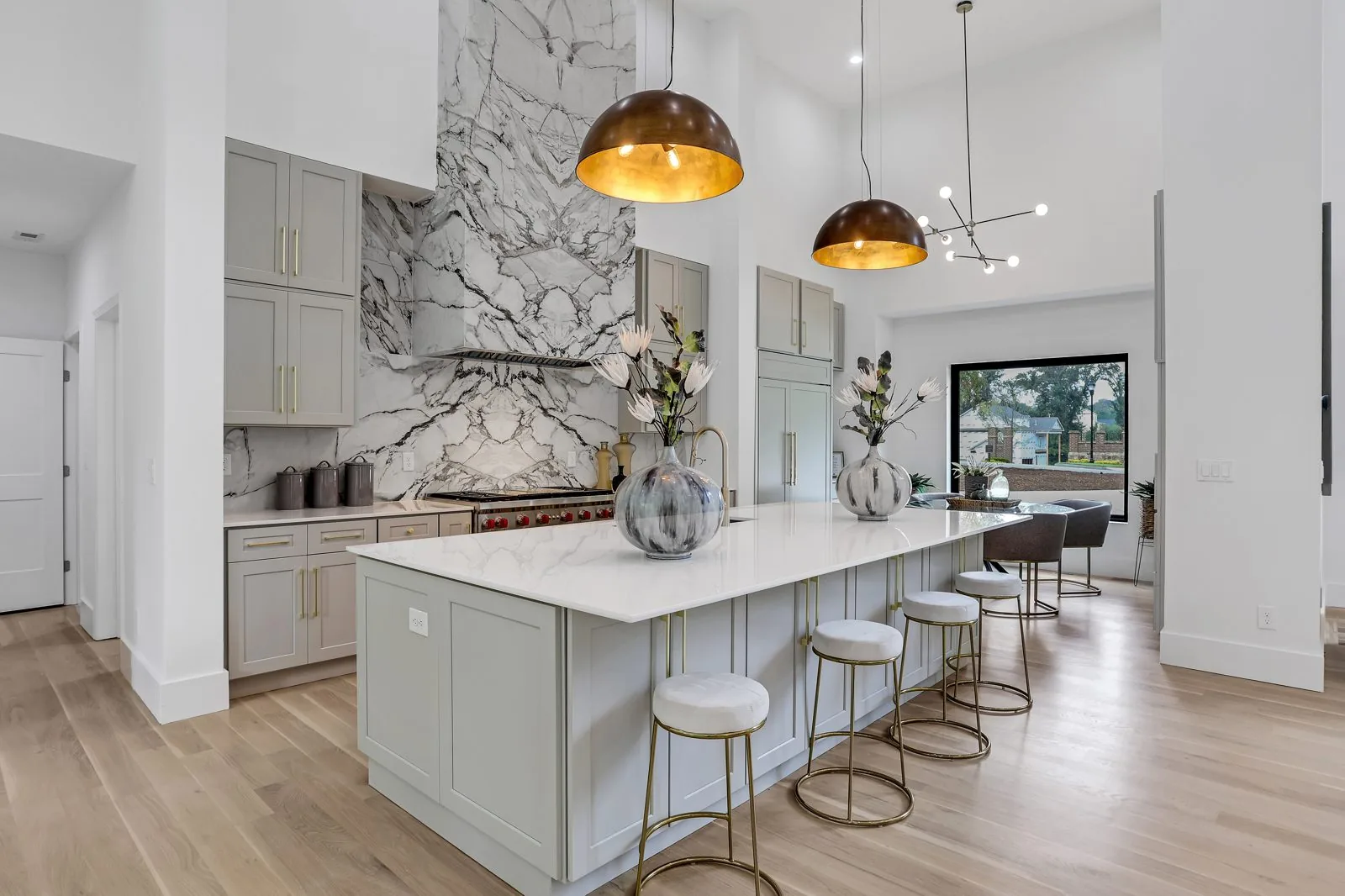
What's the difference between quartzite and marble?
They start as different rocks and end up with very different personalities. Quartzite begins as sandstone and is metamorphosed under intense heat and pressure into an extremely hard, quartz-rich natural stone. Marble begins as limestone and recrystallizes into a softer stone made mostly of calcium carbonate. That single chemical fact — quartz versus carbonate — is why quartzite shrugs off scratches and acids while marble is softer and reacts to them.
Is quartzite harder than marble?
Yes, considerably. Quartzite typically rates around 7 on the Mohs hardness scale — about the same as quartz and hard enough to resist scratches from knives and everyday grit — while marble sits around 3 to 4 and marks more easily. In a busy kitchen, that difference shows up as fewer scuffs and dull spots on quartzite. You should still cut on a board on either stone, mostly to protect your knives, but for pure durability quartzite is the tougher of the two by a wide margin.
Which one etches — and which one doesn't?
This is the deciding question for most homeowners. Marble etches: acids like lemon, wine, vinegar, and many cleaners dissolve a microscopic layer of the polished surface and leave a dull spot — and no sealer stops it. True quartzite does not etch, because it's quartz-based rather than carbonate-based, so acidic spills won't dull it. If the idea of etch marks worries you but you love the marble look, quartzite gives you that look without the anxiety. (See our marble maintenance guide for how to live happily with marble if you go that way.)
Do both need to be sealed?
Yes. Both quartzite and marble are natural, porous stones, so both are sealed at installation and re-sealed periodically to slow how fast liquids soak in. Sealing guards against staining (absorption); it does not stop etching on marble. A simple water test tells you when it's time to re-seal: drip a little water on the surface, and if it darkens within a few minutes, the pores are drinking it in. Our companion guide, Does Your Stone Need Sealing?, walks through exactly how and how often.
Can you tell quartzite and marble apart?
Not always by eye — and this trips up plenty of buyers. Many stones marketed as "quartzite" are actually dolomitic marble or a soft quartzite that etches, and the showroom name isn't proof. Two honest field tests: a scratch test (true quartzite won't be scratched by a steel blade; marble will) and an acid test on an offcut (a drop of lemon or vinegar will etch marble and softer "quartzite," but not true quartzite). We test the actual slab before we let a client count on it — because buying "low-maintenance quartzite" that turns out to etch is exactly the surprise we want to spare you.
Which is better for a kitchen?
For a hard-working kitchen where you want the marble look with the least fuss, quartzite is usually the better fit — harder, non-etching, and built for daily cooking. Marble is a wonderful kitchen stone too, with centuries of history behind it, but it's a lifestyle choice: it will pick up a soft patina and the occasional etch, which some owners find charming and others don't. Marble often shines in lower-traffic spots — a baking station, a bathroom vanity, a powder room — where its beauty leads and wear is minimal. If you want the look but not the upkeep, we'll also show you a large-format porcelain that mimics marble and never needs sealing.
So which should you choose — the honest answer?
Choose quartzite if durability is your priority and you want the marble aesthetic without etching worries. Choose marble if you love the real thing — its depth of veining, its history, its softer price — and you're at peace with a lived-in patina over the years. Because we fabricate and install both, and we test the actual slab rather than trust the label, our recommendation follows your project and how you live, not a single product line. Bring us the look you're after and we'll help you land on the right stone with clear eyes.
FAQ
Is quartzite the same as marble?
No. They look similar — both can have white or grey grounds with bold veining — but they are different rocks. Quartzite is a hard, quartz-based metamorphic stone that started as sandstone; marble is a softer, calcium-carbonate stone that started as limestone. The practical difference is durability: quartzite resists scratches and does not etch from acids, while marble is softer, etches, and asks for more careful use. Confusingly, some slabs sold as quartzite are actually soft marble, so the stone should be tested rather than trusted by name alone.
Does quartzite etch like marble?
True quartzite does not etch, because it is quartz-based rather than carbonate-based, so acidic spills like lemon, wine, or vinegar won't leave the dull spots that acids create on marble. This is the single biggest reason homeowners who love the marble look choose quartzite for a kitchen. The catch is that some stones marketed as quartzite are actually dolomitic marble that will etch — which is why a quick acid test on an offcut is worth doing before you commit. We test the slab so you know exactly what you're getting.
Is quartzite harder than marble?
Yes, by a wide margin. Quartzite rates around 7 on the Mohs hardness scale, comparable to quartz and hard enough to resist knife scratches and everyday grit, while marble sits around 3 to 4 and marks more easily. That hardness is why quartzite holds up so well in busy kitchens. You should still cut on a board on either surface, mainly to keep your knives sharp, but if scratch resistance is your deciding factor, quartzite clearly wins.
Does quartzite need to be sealed?
Yes. Quartzite is a natural, porous stone, so it is sealed at installation and re-sealed periodically to slow how fast liquids can soak in and cause staining. Sealing frequency depends on the specific stone and how hard the surface works — often every year to a few years. Use the water test to check: if water dripped on the surface darkens the stone within a few minutes, it's time to re-seal. Unlike marble, sealing on quartzite is about staining only, since quartzite doesn't etch.
How can you tell quartzite from marble in the showroom?
You often can't by eye, since the two can look nearly identical. The reliable checks are a scratch test and an acid test. True quartzite won't be scratched by a steel blade and won't etch from a drop of lemon or vinegar; marble — and softer stones mislabeled as quartzite — will scratch and etch. Because names in the trade aren't always accurate, we test the actual slab before a client counts on it being low-maintenance, so there are no surprises after install.
Is quartzite or marble better for a kitchen?
For a hard-working kitchen, quartzite is usually the better choice because it's harder and doesn't etch, giving you the marble look with far less worry. Marble is still a beautiful, historic kitchen stone, but it's a lifestyle choice that will develop a soft patina and occasional etching with use. Many homeowners put quartzite on the main working counters and save marble for lower-traffic spots like a baking area or a vanity. If you want the look with zero sealing, large-format porcelain is a third option we install.
Which is more expensive, quartzite or marble?
It depends far more on the specific slab — its rarity, color, thickness, and the fabrication your project needs — than on the category name, and the ranges overlap. In general, exotic quartzites can run at the higher end, while classic marbles are often more accessible, but there are affordable quartzites and very expensive marbles too. Because installed cost is driven by edges, cutouts, and seams as much as by the slab, the honest number comes from a real quote rather than a price-per-square-foot rule of thumb.
Is quartzite the same as quartz?
No — and the names cause endless confusion. Quartzite is a 100% natural stone quarried from the earth; quartz is an engineered material made from ground natural quartz bound with resins and pigments. Natural quartzite is harder and more heat-resistant and needs periodic sealing; engineered quartz is non-porous, never needs sealing, but can be damaged by high heat. We cover that comparison in detail in our Quartz vs. Quartzite guide.
Related guides: Quartz vs. Quartzite · Marble Maintenance · Does Your Stone Need Sealing?
Torn between quartzite and marble?
Tell us the look you're after and how you'll use the space — we'll test the slab and help you choose the right stone.