
Honed vs. Polished vs. Leathered: Choosing a Finish
Short answer: the finish is how the surface of a slab is treated, and it changes the look, the feel, and how the stone wears — without changing the stone itself. Polished is a glossy, reflective shine that deepens color and veining, but shows etching and water spots most. Honed is a smooth matte with little to no shine — soft and contemporary, and it hides etching and light wear far better, which is why it's a favorite for hard-working marble. Leathered is textured with a subtle low sheen, keeping more color depth than honed while hiding fingerprints and water spots — excellent on dark granite and busy islands. Pick by the look you want and how the space is used. We fabricate all three — here's the honest comparison.
By Leo Chuahy · Prime Surfaces — founder, with a stone-slab sourcing background (Brazil, Spain & Italy)
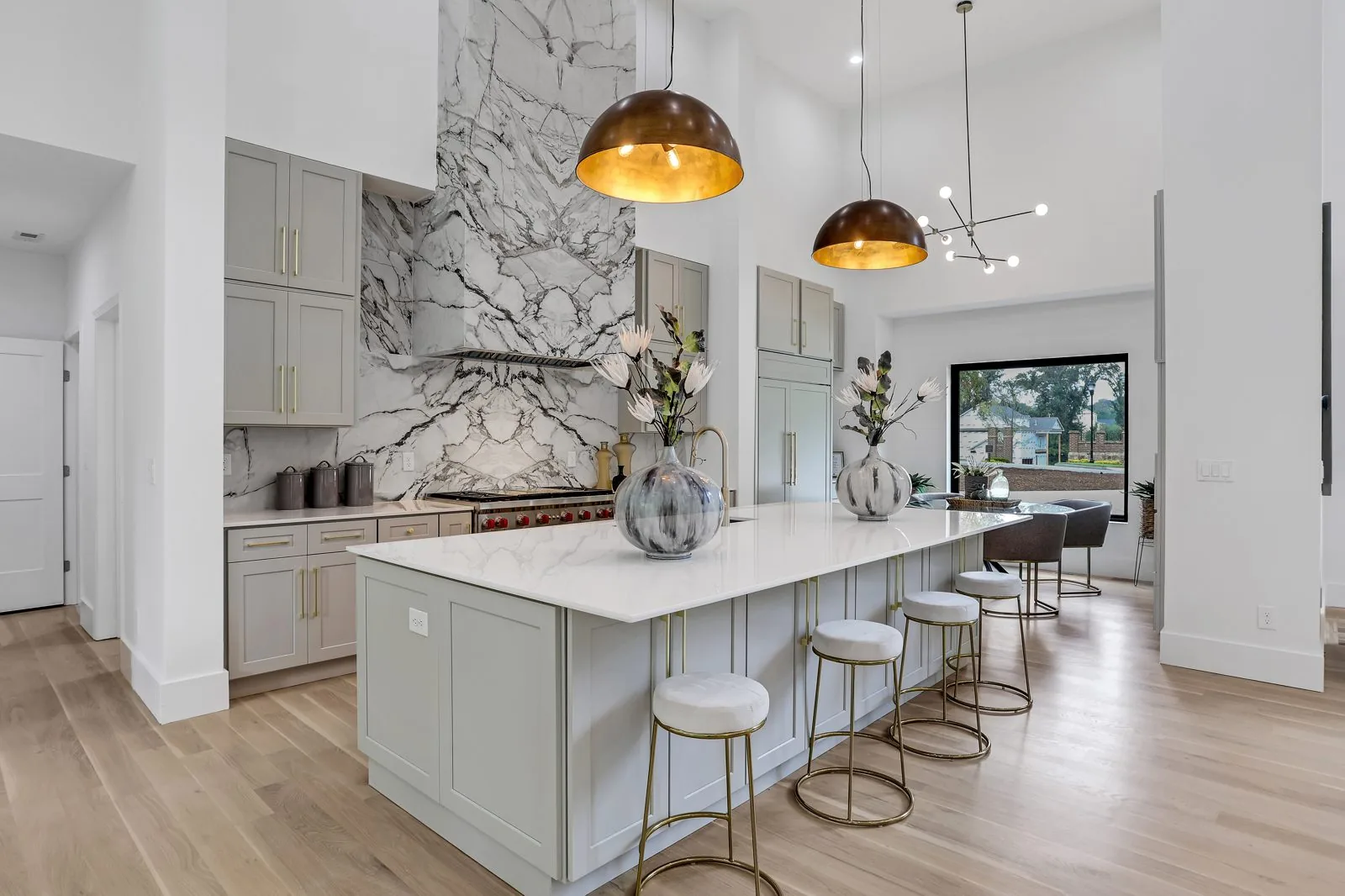
What's the difference between honed, polished, and leathered?
All three are ways of finishing the surface of the same slab — they change how it looks and feels, not what the stone is. Polished is buffed to a reflective, glossy shine. Honed is ground to a smooth, flat matte with little to no shine. Leathered is brushed to a soft, textured surface with a subtle low sheen, landing between the other two. The choice changes how the stone reads in the room, how it feels under your hand, and — the practical part — how readily it shows etching, fingerprints, and water spots. It applies to natural stone most of all, where the difference is biggest.
What is a polished finish?
Polished is the finish most people picture: buffed to a glossy, mirror-like shine. It's the most common finish on granite, marble, and quartz, and the gloss brings out the full depth of color and the drama of veining — a polished exotic slab practically glows. It's also easy to wipe clean. The trade-off is visibility: because the surface is a mirror, it shows etch marks, scratches, and water spots more readily, since any dull spot interrupts the shine. On marble in particular, an acid etch stands out far more on polished than on a matte finish.
What is a honed finish?
A honed finish is ground smooth and flat but stopped before it's buffed to a shine, leaving a soft, contemporary matte that feels smooth to the touch. Its biggest practical advantage is that it hides etching and light wear much better than polished — there's no gloss for a dull spot to break up — which is exactly why so many homeowners choose honed marble for a working kitchen. The trade-off is that a honed surface is slightly more open, so it can show oil marks and may absorb a touch faster, making sealing and prompt spill cleanup a little more important. Our marble maintenance guide covers this in depth.
What is a leathered finish?
A leathered finish is brushed to create a soft, textured surface with a subtle low sheen — somewhere between honed and polished. Run your hand across it and you feel a gentle grain that follows the natural structure of the stone. It keeps more of the stone's color depth than a flat honed finish while staying far less reflective than a polish. Leathered is especially popular on darker granites and some quartzites, because the texture hides fingerprints, water spots, and minor smudges remarkably well — a practical, low-show choice for busy islands and kitchens that get a lot of hands on them.
Which finish hides etching, scratches, and fingerprints best?
It depends on what you're trying to hide. For etching and light scratches, matte wins — a honed finish disguises them far better than polished. For fingerprints, water spots, and smudges, a leathered finish excels thanks to its texture. Polished looks the most dramatic but shows every mark most clearly. If you love marble but worry about etching, honed or leathered is usually the happier choice; if you want maximum drama and will keep the surface wiped, polished rewards you. (If etching itself is new to you, our quartzite vs. marble guide explains why marble etches and quartzite doesn't.)
Does the finish affect maintenance and sealing?
On natural stone, a little. A polished surface is tight and slightly more stain-resistant between sealings, but it shows etches and water spots. Honed and leathered finishes are a touch more open, so on porous stone they can absorb a bit faster and may want sealing somewhat more often — the water test still tells you when, regardless of finish (see does your stone need sealing?). On non-porous quartz and porcelain, the finish is purely cosmetic — those never need sealing. Across every finish, the care basics are identical: a pH-neutral cleaner, a soft cloth, and prompt cleanup of spills.
Which finish is right for your kitchen or bath?
Start with the look you want and how the space is used. Choose polished for maximum drama, color depth, and shine — ideal for vanities, lower-traffic spots, and anyone who loves gloss and will keep it wiped. Choose honed for a soft, modern matte that hides etching and wear — a favorite for hard-working marble and quartzite kitchens. Choose leathered for a textured, practical surface that hides fingerprints and water spots — great on dark granite and busy islands. In a bathroom, a polished vanity reads luxe; in a family kitchen, honed or leathered often wears more gracefully.
The Prime Surfaces take
The finish is one of the most underrated decisions in a project — the same slab can feel classic and glossy, soft and modern, or textured and rugged depending on how it's finished. Because we fabricate all three and came from the slab side of the business, we'll show you the exact finishes available for the slab you love and, just as important, tell you honestly how each one will wear for your kitchen or bath. Many of our favorite results pair finishes thoughtfully — a honed marble perimeter with a polished accent, or a leathered island that shrugs off fingerprints. Bring us the look you're after and we'll help you land on the right one.
FAQ
What is the difference between honed, polished, and leathered finishes?
They are three ways the same slab's surface can be finished, and they change the look and feel more than the stone itself. Polished is buffed to a reflective, glossy shine that deepens color and veining. Honed is ground to a smooth, flat matte with little to no shine, for a soft, contemporary look. Leathered is textured, with a subtle low sheen and a gentle tactile grain that follows the stone, landing between the other two. The finish does not change what the stone is, but it changes how it reads in a room, how it feels under your hand, and how readily it shows etching, fingerprints, and water spots.
What is a polished finish?
A polished finish is buffed to a glossy, reflective shine. It is the most common finish and the one most people picture on granite, marble, and quartz. The gloss brings out the depth of color and the drama of veining, and it is easy to wipe clean because the surface is sealed tight and smooth. The trade-off is that the mirror-like surface shows etch marks, scratches, and water spots more readily, because any dull spot interrupts the shine. On marble especially, an acid etch is far more visible on a polished finish than on a matte one.
What is a honed finish?
A honed finish is ground smooth and flat but stopped before it is buffed to a shine, leaving a soft matte surface. It reads calm and contemporary and feels smooth to the touch. Its biggest practical advantage is that it hides etching and light wear far better than a polished finish, because there is no gloss for a dull spot to interrupt, which is why many homeowners choose honed marble for a working kitchen. The trade-off is that a honed surface is slightly more open, so it can show oil marks or absorb a touch faster, which makes sealing and prompt spill cleanup a little more important.
What is a leathered finish?
A leathered finish is brushed to create a soft, textured surface with a subtle low sheen, somewhere between honed and polished. Running your hand across it, you feel a gentle grain that follows the natural structure of the stone. It keeps more of the stone's color depth than a flat honed finish while staying far less reflective than a polish. Leathered is especially popular on darker granites and some quartzites because the texture hides fingerprints, water spots, and minor smudges very well, making it a practical, low-show choice for busy kitchens and islands that get a lot of hands on them.
Which finish hides etching, scratches, and fingerprints best?
For hiding etching and light wear, matte wins: a honed finish disguises etch marks and scratches far better than polished, because there is no shine for a dull spot to break up. For hiding fingerprints, water spots, and smudges day to day, a leathered finish is excellent thanks to its texture. Polished looks the most dramatic but shows every mark most clearly. If you love marble but worry about etching, honed or leathered is usually the happier choice. If you want maximum drama and will keep the surface wiped, polished rewards you. It comes down to which kind of wear you would rather not see.
Does the finish affect maintenance and sealing?
On natural stone, yes, a little. A polished surface is tight and slightly more stain-resistant between sealings, but it shows etches and water spots. Honed and leathered finishes are a touch more open, so on porous stone they can absorb a bit faster and may want sealing somewhat more often, and honed can show oil marks. The water test still tells you when to reseal regardless of finish. On non-porous surfaces like quartz and porcelain, the finish is purely cosmetic because the material never needs sealing. Across all finishes, the care basics are the same: pH-neutral cleaner, a soft cloth, and prompt cleanup of spills.
Which countertop finish is right for my kitchen or bath?
Start with the look you want and how the space is used. Choose polished for maximum drama, color depth, and shine, and if you will keep the surface wiped, ideal for lower-traffic spots, vanities, and anyone who loves a glossy look. Choose honed for a soft, modern matte that hides etching and wear, a favorite for hard-working marble and quartzite kitchens. Choose leathered for a textured, practical surface that hides fingerprints and water spots, great on dark granite and busy islands. The right answer also depends on the material and whether it is indoors or out, which is exactly the conversation we have with every client.
Can any stone be honed or leathered, and does it cost more?
Most natural stones can be finished polished, honed, or leathered, though not every slab is offered in every finish, and some finishes suit certain stones better, leathered, for instance, shows beautifully on many dark granites. Quartz and porcelain come in the finishes the manufacturer produces, commonly polished and matte, with fewer leathered options. Whether an alternative finish costs more depends on the material and the slab, since a specialty finish can add to fabrication, so it is best confirmed in a real quote. We will show you the finishes available for the exact slab you are considering and what each one does to the look and the price.
Related guides: Marble Maintenance · Quartzite vs. Marble · Does Your Stone Need Sealing?
Not sure which finish fits your stone?
Tell us the slab you're drawn to and how you'll use the space — we'll show you polished, honed, and leathered options and how each one will live in your home.